

Roof Top Tents Are Great, But Installing Them Incorrectly Can Result in Fines!
During a road trip, 65-year-old Li Gang paid a heavy price when his newly installed roof top tent was fined and forcibly removed. Like many campers, he did not realize that incorrect installation could turn his dream camping equipment into a legal and safety hazard.
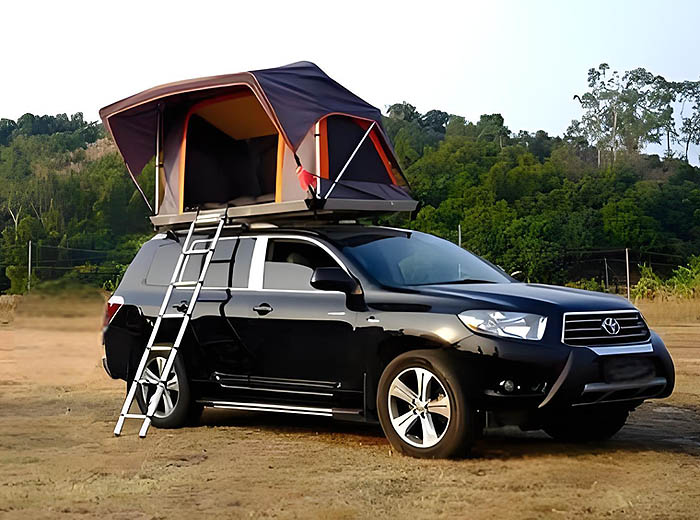
Whether you are a retiree exploring scenic routes or an adventure enthusiast, choosing the right roof top tent (RTT) and installing it correctly is crucial. This article covers everything from comparisons between hard-shell and soft-shell tents to laws and regulations and expert installation techniques.
1. Laws and regulations: Avoid fines and ensure safety
- Do not exceed the height limit: After installing a roof top tent, the height from the roof of the car must not exceed 50 cm, otherwise you may be fined 200 yuan as soon as you hit the road! Pay special attention to the height of the luggage rack itself, and do not exceed the limit after stacking the tent.
- Vehicle Type Compatibility: For standard sedans or small SUVs without factory-installed load-bearing roof racks, forcing installation may damage the roof’s A and B pillars, posing a rollover risk. It is recommended to modify vehicles such as SUVs, mid-to-large SUVs, or MPVs.
- Do Not Remove Seats During Modification: Some drivers remove seats to create space, which constitutes illegal modification! If detected by traffic police, the vehicle will be impounded.
2. Hard shell tent vs. soft shell tent: which one is best for you?
Hard top roof top tent (convenient and durable)
- Advantages: One-touch automatic opening and closing, strong wind and rain resistance, suitable for middle-aged and elderly people with weak physical strength.
- Disadvantages: Heavy (generally over 60 kg), high price, significant increase in fuel consumption, equivalent to carrying an extra adult.
Soft top roof top tent (Best for budget and flexibility)
- Advantages: Lightweight and economical, suitable for car owners with limited budgets.
- Disadvantages: Difficult to set up, prone to mold when stored in rainy weather, more suitable for people who are agile and like to do things themselves.
Hard-shell roof top tents are suitable for people who value quick setup and durability. For budget-conscious campers who don’t mind manual setup, soft-shell RTTs are more suitable.
3. Roof Top Tent Installation: Safety Tips
- The luggage rack must be sturdy enough: it must be able to bear 1.5 times the weight of the tent. For example, for a 60 kg tent, the luggage rack must have a dynamic load capacity of at least 90 kg. Before installation, use a weighing scale to measure the load capacity of the crossbar.
- Add washers to the fixing screws: Bumpy roads can cause loosening, so add rubber washers to the contact surface between the screws and the roof to prevent noise and protect the car paint.
- Place the ladder at an angle for greater stability: The angle between the tent ladder and the ground should be less than 60 degrees, and the bottom should be tied with a non-slip strap. Wrap the ladder crossbar with fluorescent tape so that you won’t step on it at night.
- Carry emergency tools: Keep a ratchet wrench and spare screws by the driver’s seat. In case of extreme weather, you can quickly dismantle the tent.
4. Comfort and safety upgrades for the elderly
- Is climbing a regular ladder too strenuous? Customize a Z-shaped folding staircase with steps widened to 30 centimeters and anti-slip sleeves on the handrails, making it easy for those with knee issues to climb up and down.
- In mountainous areas at night, temperatures are low. Use a 12V car electric blanket (power ≤ 50W) placed under a moisture-proof pad, plugged into the cigarette lighter, which is safer than bringing a gas canister.
- Install a foldable toilet bag on the side of the tent to solve the issue of getting up at night. Note! Waste must be disposed of in public restrooms at service areas; do not dump it randomly in the wild.
Ultimate Tips for Easy Roof Camping
- Check local laws before traveling—regulations vary by region.
- Inspect bolts and seams before each trip to prevent accidents.
- Prepare an emergency tool kit (wrench, spare screws, sealant).
Choose the right roof top tent (hard-shell or soft-shell) and follow these guidelines to enjoy a safe, legal, and comfortable adventure under the stars!