
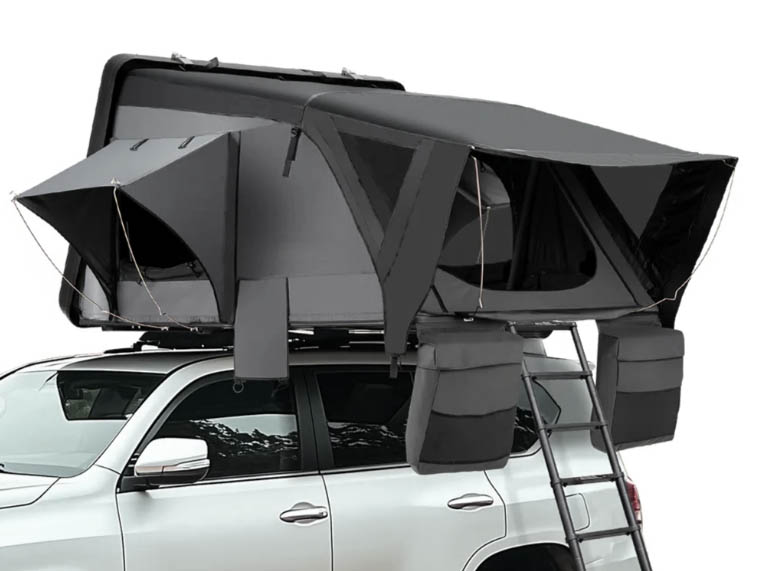
Understanding the materials used in roof top tents
Roof top tents have become a popular choice among outdoor enthusiasts, offering comfort and convenience during trips. One of the most important factors to consider when choosing a roof tent is the material. The material of the tent affects its durability, weight, waterproofing, and overall comfort.

1. ABS and Fiberglass
Many high-end roof tents are made from ABS (acrylonitrile butadiene styrene copolymer) and fiberglass. These materials are renowned for their durability and waterproof properties, making them an ideal choice for long-term outdoor use.
- ABS: ABS is a sturdy yet lightweight material commonly used for tent shells. It offers excellent durability and impact resistance. Some models combine ABS with UV-resistant coatings to protect the tent from sun damage. However, prolonged exposure to harsh weather conditions can cause the tent to fade and oxidize.
- Fiberglass: Fiberglass is another common material used for car roof tent shells. It is strong while keeping the tent lightweight. Compared to ABS, fiberglass also has excellent UV resistance and is less prone to fading. However, compared to ABS, fiberglass is more prone to cracking under extreme pressure.
2. Aluminum Alloy
Aluminum alloy is the top-tier material used in high-end roof top tents. It is highly regarded for its lightweight properties and wind resistance.
- Advantages: Made from aerospace-grade aluminum alloy, these tents are extremely lightweight and easy to set up, while also effectively withstanding strong winds and other harsh weather conditions.
- Disadvantages: Although aluminum alloy has many advantages, it is often heavier than other materials, which may affect portability. Additionally, aluminum alloy tents are typically more expensive.
3. Oxford Fabric
Oxford fabric is a commonly used material for the main body of tents. Due to its affordability, durability, and waterproof properties, Oxford cloth is often used in mid-range rooftop tents.
- 600D Oxford fabric: This material is widely used for its excellent waterproof performance, with a waterproof rating of up to 3,000 mm water column. It is eco-friendly and mold-resistant, making it an ideal choice for long-distance camping.
- Applications: Oxford fabric is typically used for tent walls and linings, providing a comfortable and breathable sleeping space.
4. Special Coatings and Treatments
To enhance the performance of rooftop tents, many manufacturers apply special coatings and treatments to the tent shells.
- UV-resistant coating: Some tents feature UV-resistant coatings to protect the fabric from sun damage and aging, extending the tent’s lifespan and helping to maintain its color.
- Waterproof coating: Tents with waterproof coatings remain effective even in heavy rain. These tents’ shells are typically treated with waterproofing agents to ensure they perform well in humid conditions.
5. Memory foam and insulation layers for enhanced comfort
To enhance comfort, some high-end rooftop tents are equipped with memory foam mattresses and insulation layers.
- Memory foam: These tents feature memory foam mattresses that conform to your body’s contours, providing a more comfortable sleeping experience. They are ideal for campers who want a good night’s sleep after a day of outdoor activities.
- Insulation layers: Some models include additional insulation layers to regulate internal temperature. These tents perform perfectly in both hot and cold climates, ensuring comfort regardless of weather conditions.
Key considerations when choosing a rooftop tent
- Weight: Aluminum roof tents are lightweight and easy to carry, but may be heavier than inflatable tents. If you need a tent that is easy to transport, consider the weight factor.
- Inflatable tents: Inflatable roof tents are lighter (typically 30-40 kg) and easy to set up. However, they require regular checks to maintain air pressure and prevent leaks.
- Durability: Materials like ABS, fiberglass, and aluminum alloy offer long-lasting durability. However, ensure the tent is well-maintained to avoid issues like oxidation or cracking.
By understanding the different materials and their advantages, you can choose the roof tent that best suits your needs. Whether you prioritize durability, comfort, or convenience, there is a roof tent perfect for your adventure.