Tag: Hard shell roof top tent

  • Hard Shell vs. Soft Shell Roof Top Tent: Which One Fits Your Adventure Style?

    Hard Shell vs. Soft Shell Roof Top Tent: Which One Fits Your Adventure Style?

    A carefully selected roof top tent not only enhances your sleeping space but also redefines comfort, safety, and efficiency on the road. Compared to traditional ground tents, rooftop tents solve three long-standing pain points: they keep you off damp ground and away from creepy crawlies, save valuable campsite space, and reduce setup time to under two minutes. This makes them the ideal choice for road trippers who move between campsites daily. With the global rooftop tent market growing at an annual rate of over 12%, it’s clear that more adventurers are trading ground pegs for roof racks.

     roof top tent

    But the biggest dilemma for buyers is: hard shell or soft shell? Which one is lighter? Which roof tent can withstand the test of severe weather? And which one truly suits your vehicle and driving habits? Let’s take a technical look, combined with real-world experience, to break it down for you in detail and reveal some surprises that even seasoned campers might overlook.

    What’s the Real Difference Between Hard Shell and Soft Shell Roof Top Tents?

    Mainstream roof top tents split into two structural families:

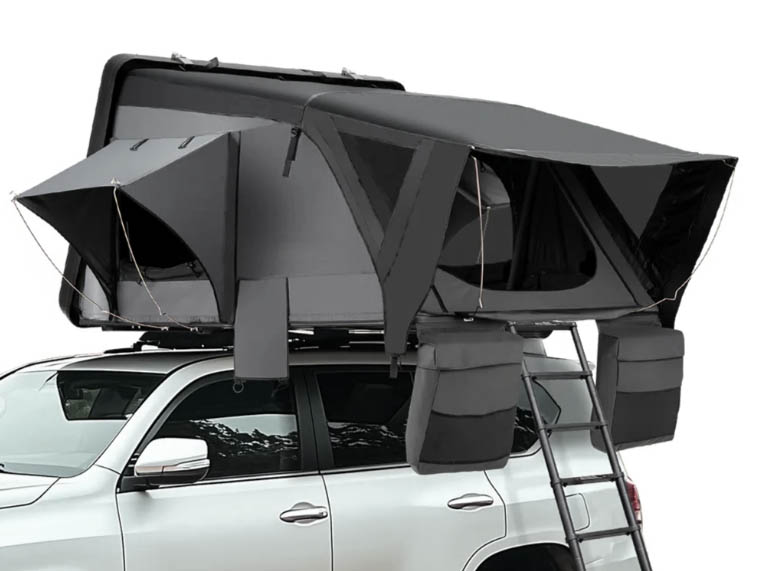
    • Hard shell roof top tents—featuring aerodynamic shells made of aluminum alloy, fiberglass, or polycarbonate. When closed, they form a sturdy, low-profile shell-like structure that provides protection from wind and rain. Some high-end models now feature aluminum hard shell roof top tents with pneumatic struts to assist in opening, combining the benefits of both lightness and durability.
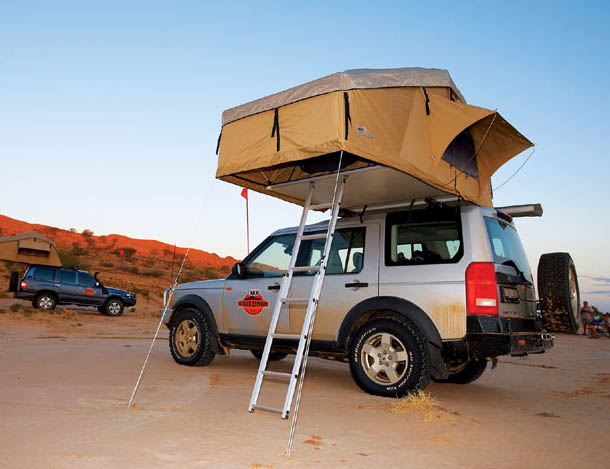
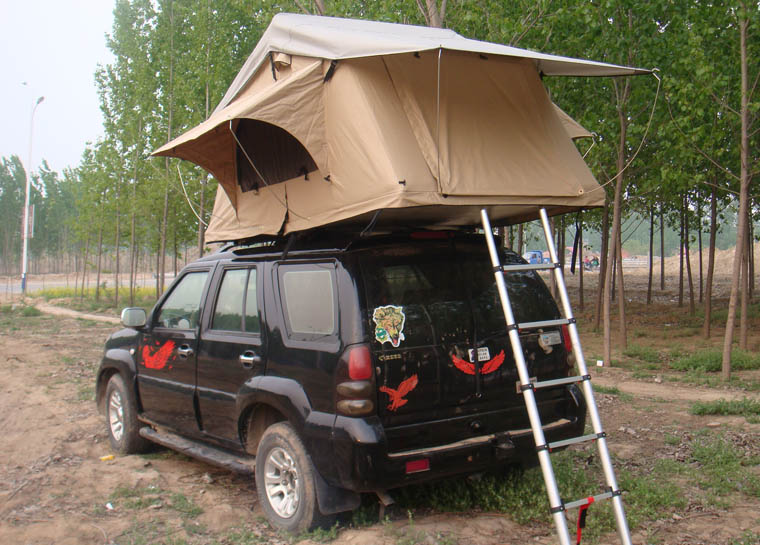
    • Soft shell roof top tents—feature a foldable fabric canopy (typically made of 280–320 g polyester/cotton blend) supported by telescoping poles. When not in use, they can be folded into a compact soft shell for easy storage. In this category, you’ll find foldable roof top tents (pop-up) and inflatable hybrid tents, though the latter remain a niche product for now.

    Emerging designs like the side-opening hard shell rooftop tent (hinged longitudinally) combine the rapid deployment of soft shells with the structural rigidity of hard shells. They open sideways, creating a larger interior space while maintaining a lower center of gravity than traditional wedge-shaped tents.

    Head-to-Head Comparison: 7 Critical Dimensions

    FeatureHard Shell Roof Top TentSoft Shell Roof Top Tent
    Weather resistanceWithstands Category 8 winds (≥62 mph) and heavy snow loads (up to 500 lbs static)Resilient in moderate rain/wind; vulnerable to flapping in high gusts
    Setup time30–60 seconds (gas-strut assisted)2–5 minutes (pole assembly + fabric stretching)
    Weight110–160 lbs (50–73 kg) – heavier, impacts MPG75–110 lbs (34–50 kg) – 30% lighter on average
    Interior headroom40–45 inches – uniform, boxy space35–38 inches – sloped edges reduce usable volume
    DurabilityScratch/UV-resistant shell; 5–8 year lifespanFabric degrades in 3–5 years; requires reproofing
    Price (new)$2,200–$4,500+$1,200–$2,800 (≈40% lower entry cost)
    AerodynamicsStreamlined – reduces drag and wind noiseBulky shape increases fuel consumption by 8–15%

    Verdict: Hard shells excel in longevity and all-weather protection; soft shells win on budget and weight—perfect for weekend warriors who don’t need expedition-grade armor.

    Which roof top tent is best suited for your use case?

    Overlanding & Off-Road Expeditions

    When driving on rough terrain, crossing rivers, and traversing mountain passes, your roof top tent must be able to withstand severe vibrations. In these situations, prioritize the following:

    • Anti-shake engineering – Choose zippers bearing the SBS brand logo (self-locking, anti-slip) and hydraulic damping systems that absorb vibrations when the tent is open.
    • Mounting integrity – Use only roof tent mounting brackets rated for a dynamic load of ≥165 lbs (75 kg) per side. Use a roof tent mounting kit custom-designed for your vehicle’s roof crossbars—Toyota Land Cruisers, Jeep Wranglers, and Ford Rangers typically require custom adapters.
    • Armor Protection – Hard shells with a textured, scratch-resistant coating (such as Raptor lining) effectively withstand branches and flying debris. Aluminum alloy outperforms fiberglass in terms of impact resistance.

    Weekend Getaways and Family Camping

    For paved-road trips and established campsites, a foldable roof top tent hits the sweet spot. Focus on:

    • Lightweight Design – Weighing less than 55 pounds (25 kilograms), they can be easily loaded and unloaded by one person without lifting equipment. This is crucial if you store your tent during the off-season.
    • Rapid stowage – Gas struts and automatic tension straps reduce packing time to under 3 minutes, perfect for impatient kids.
    • Ventilation – Essential features: double-layered mesh windows (insect-proof) and vents on all four sides. This reduces condensation by up to 70% compared to single-window tents.

    What additional equipment is needed after installing a roof top tent?

    Installation is just the first step; new needs often arise during actual use. The most commonly overlooked item is the roof tent ladder. Standard aluminum alloy ladders pose safety hazards in wet or slippery conditions, so we recommend choosing a professional model with anti-slip treads. Additionally, the compatibility of the roof tent mounting brackets directly affects driving safety, as load-bearing structures vary significantly across different vehicle models.

    Are you ready to elevate your camping experience?

    Choosing the right roof top tent isn’t about chasing the most expensive option—it’s about aligning your vehicle, budget, and travel style with the right shell type and accessories. Whether you choose a sturdy, durable hard shell roof top tent for cross-country trips or an affordable soft shell roof top tent for family outings, remember: the best tent is the one that gets you out camping more often.
  • Self-driving tours for middle-aged and elderly people: Four key points to consider when modifying your roof top tent

    Self-driving tours for middle-aged and elderly people: Four key points to consider when modifying your roof top tent

    Roof Top Tents Are Great, But Installing Them Incorrectly Can Result in Fines!

    During a road trip, 65-year-old Li Gang paid a heavy price when his newly installed roof top tent was fined and forcibly removed. Like many campers, he did not realize that incorrect installation could turn his dream camping equipment into a legal and safety hazard.

    Roof top tent

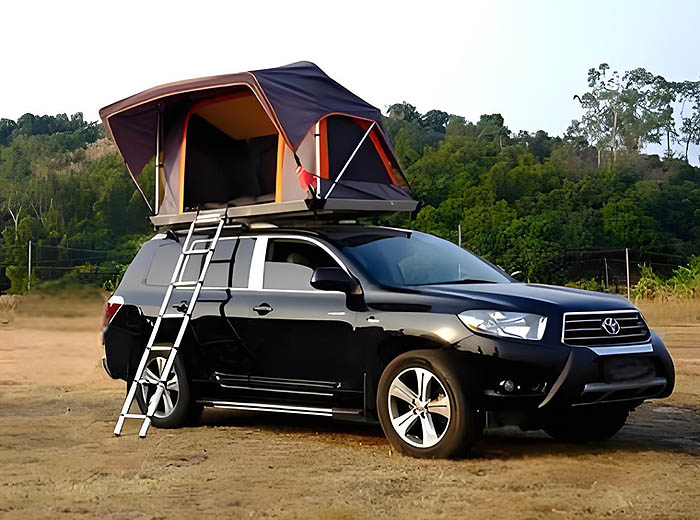
    Whether you are a retiree exploring scenic routes or an adventure enthusiast, choosing the right roof top tent (RTT) and installing it correctly is crucial. This article covers everything from comparisons between hard-shell and soft-shell tents to laws and regulations and expert installation techniques.

    1. Laws and regulations: Avoid fines and ensure safety

    • Do not exceed the height limit: After installing a roof top tent, the height from the roof of the car must not exceed 50 cm, otherwise you may be fined 200 yuan as soon as you hit the road! Pay special attention to the height of the luggage rack itself, and do not exceed the limit after stacking the tent.
    • Vehicle Type Compatibility: For standard sedans or small SUVs without factory-installed load-bearing roof racks, forcing installation may damage the roof’s A and B pillars, posing a rollover risk. It is recommended to modify vehicles such as SUVs, mid-to-large SUVs, or MPVs.
    • Do Not Remove Seats During Modification: Some drivers remove seats to create space, which constitutes illegal modification! If detected by traffic police, the vehicle will be impounded.

      2. Hard shell tent vs. soft shell tent: which one is best for you?

      Hard top roof top tent (convenient and durable)

      • Advantages: One-touch automatic opening and closing, strong wind and rain resistance, suitable for middle-aged and elderly people with weak physical strength.
      • Disadvantages: Heavy (generally over 60 kg), high price, significant increase in fuel consumption, equivalent to carrying an extra adult.

      Soft top roof top tent (Best for budget and flexibility)

      • Advantages: Lightweight and economical, suitable for car owners with limited budgets.
      • Disadvantages: Difficult to set up, prone to mold when stored in rainy weather, more suitable for people who are agile and like to do things themselves.

      Hard-shell roof top tents are suitable for people who value quick setup and durability. For budget-conscious campers who don’t mind manual setup, soft-shell RTTs are more suitable.

      3. Roof Top Tent Installation: Safety Tips

      • The luggage rack must be sturdy enough: it must be able to bear 1.5 times the weight of the tent. For example, for a 60 kg tent, the luggage rack must have a dynamic load capacity of at least 90 kg. Before installation, use a weighing scale to measure the load capacity of the crossbar.
      • Add washers to the fixing screws: Bumpy roads can cause loosening, so add rubber washers to the contact surface between the screws and the roof to prevent noise and protect the car paint.
      • Place the ladder at an angle for greater stability: The angle between the tent ladder and the ground should be less than 60 degrees, and the bottom should be tied with a non-slip strap. Wrap the ladder crossbar with fluorescent tape so that you won’t step on it at night.
      • Carry emergency tools: Keep a ratchet wrench and spare screws by the driver’s seat. In case of extreme weather, you can quickly dismantle the tent.

      4. Comfort and safety upgrades for the elderly

      • Is climbing a regular ladder too strenuous? Customize a Z-shaped folding staircase with steps widened to 30 centimeters and anti-slip sleeves on the handrails, making it easy for those with knee issues to climb up and down.
      • In mountainous areas at night, temperatures are low. Use a 12V car electric blanket (power ≤ 50W) placed under a moisture-proof pad, plugged into the cigarette lighter, which is safer than bringing a gas canister.
      • Install a foldable toilet bag on the side of the tent to solve the issue of getting up at night. Note! Waste must be disposed of in public restrooms at service areas; do not dump it randomly in the wild.

        Ultimate Tips for Easy Roof Camping

        • Check local laws before traveling—regulations vary by region.
        • Inspect bolts and seams before each trip to prevent accidents.
        • Prepare an emergency tool kit (wrench, spare screws, sealant).

        Choose the right roof top tent (hard-shell or soft-shell) and follow these guidelines to enjoy a safe, legal, and comfortable adventure under the stars!

      1. Hard Shell Roof Top Tent Review: Worth the Investment?

        Hard Shell Roof Top Tent Review: Worth the Investment?

        Roof Top Tent vs. Regular Tent: Why Choose a Hard Shell Roof Tent?

        Roof Top Tents (RTTs) are a game changer for off-road and SUV camping. After a full summer of testing the Heching HC-ABS01 hard shell roof top tent, I’m sharing my honest thoughts on performance, comfort and value.

        HC-ABS01 Hard Shell Roof Top Tent

        Why Choose a Hard Shell Roof Top Tent?

        Hard-shell roof tents like the Heching HC-ABS01 offer the following key advantages over soft-shell tents:

        • Less wind resistance and better fuel efficiency – aerodynamic design reduces drag compared to bulky soft-shell tents.
        • Faster setup (under 5 minutes!) -No need for poles or complicated assembly.
        • More durable – ABS hard shells can withstand harsh weather.
        • Better Insulation – Elevated sleeping area keeps moisture and cold off the ground.

        Popular brands like Ikamper, Ironman and Thule all offer quality hard-shell roof top tents, but the Heching HC-ABS01 stands out for its sleek, low-profile design and affordable price (under $2,000).

        Heching HC-ABS01 Hard Shell Roof Top Tent – Pros and Cons

        ✅ Pros

        • Ultra Stylish Design – Lowest profile hard shell RTT I’ve ever seen with zero wind noise at highway speeds.
        • SUV – Fits Jeeps, 4x4s and mid-size SUVs, maintains a streamlined look.
        • ALL WEATHER – Rugged construction handles rain, snow and high winds better than a ground tent.
        • Comfortable Elevated Sleeping – Built-in mattress keeps you dry and insulated from cold surfaces.
        • Quick setup – Unlatch and pop the tent open and you’re set up in minutes.

        ❌ Cons

        • Limited interior space – best suited for two people; requires sitting when changing clothes.
        • No built-in storage – gear must be kept inside and feels cramped.
        • Requires level parking – uneven ground can affect sleep quality.
        • No soundproofing – As with all tents, noise from wind/rain is noticeable.
        • Only accessible via ladder – Climbing down during the night to use the toilet can be inconvenient.

        Is the Hard Shell Roof Top Tent worth buying?

        Definitely worth it – if you camp regularly! After 20+ nights of camping, the Heching HC-ABS01 has paid for itself in hotel fees. It’s perfect for off-road adventures, forest and wildlife camping (safer than ground tents), and winter camping (no ground chill).

        Final Verdict: Best SUV Roof Top Tent for the Money

        If you want a durable, low-profile roof top tent but don’t want to spend Ikamper money, the Heching HC-ABS01 is the top choice.

        Ready to upgrade your camping gear? Join our community for more SUV tent tips and gear reviews!

      2. Top 5 Cost Effective Roof Top Tent Recommendations

        Top 5 Cost Effective Roof Top Tent Recommendations

        With the rise of self-driving tours and outdoor camping, traditional outdoor tents can no longer meet the needs of modern travelers. Roof Top Tent is rapidly becoming a must-have equipment for self-driving enthusiasts due to its unique advantages – completely waterproof and moisture-proof, effective protection against snakes and insects, providing a safer sleeping environment and better privacy protection. In this article, we’ll detail five top-performing Roof Top Tents on the market to help you find the camping solution that best suits your needs.

        HC-CL180 Soft Shell Roof Top Tent

        The Three Types of Roof Top Tents in Detail

        Soft Shell Roof Top Tent: An Affordable Choice for Large Spaces

        Soft shell tents are favored by campers with limited budgets because of their relatively low price ($3,000-$5,000 range) and larger interior space. These tents are made of flexible materials and require manual unfolding and stowing. Although the set-up process is cumbersome and may take 15-30 minutes to complete, the unfolded internal height is usually up to 1.2-1.5 meters, providing ample space for standing and moving around. It is worth noting that soft-top tents are relatively less wind-resistant and require additional reinforcement in adverse weather conditions.

        Hard Shell Roof Top Tent: High-end and Convenient Automatic Solution

        Hard-shell Roof Top Tents represent the high-end level of Roof Top Tent technology, and are motorized for one-touch automatic unfolding and stowage, with the entire process taking only 10-15 seconds to complete. This type of tent uses a rigid shell material (usually fiberglass or ABS plastic), usually weighs between 50-80 kilograms, and has a price range of $6,000-20,000. The outstanding advantage of hardtop tents is their excellent wind and rain protection and extremely fast setup speed, which is especially suitable for frequent travelers on the move or for camping needs under adverse weather conditions.

        Hydraulic Semi-Automatic Roof Top Tent: The Mainstream Choice for Balancing Performance and Price

        Hydraulic Semi-Automatic Roof Top Tents are by far the most popular type on the market today, perfectly balancing convenience and value for money. With a hydraulic support system, these tents can be deployed in 1-2 minutes and are relatively easy to store. Although the interior space is slightly smaller than soft top tents (usually 1-1.2 meters in height), it is large enough to comfortably accommodate 2-3 people. The price range is usually between $4,000 and $8,000, and the weight is in the 35-55 kilogram range. This type of tent is particularly suitable for camping enthusiasts who are looking for convenience but are not willing to pay high-end prices.

        In-depth Review of Top Roof Top Tent Brands

        1. WEIPA: the luxury mobile bedroom for long-distance traveling

        With more than 40 years of experience in manufacturing outdoor equipment, WEIPA from Taiwan, China, is one of the leading brands in the Roof Top Tent field. The brand provides a full range of Roof Top Tent solutions from entry-level to high-end, and its product line covers a wide range of Roof Top equipment such as car luggage and roof rack bars.

          Star Product: WP-ZP-ZC Automatic Roof Top Tent

          • Hydraulic support system realizes 3 seconds of rapid unfolding
          • Waterproof Oxford fabric with ABS soft rubber shell provides all-weather protection.
          • High elasticity foam mattress ensures sleeping comfort
          • Closed size: 215×130×30cm
          • Unfolded size: 215×130×110cm
          • Weight capacity: 300kg
          • Suitable for: 2-3 people
          • Special recommendation: suitable for long road trips and frequent campsite changes

          2. Great Dane: Cost-effective choice for the transformation of professional OEMs

          With the experience of OEM for many international famous brands, the Great Dane brand perfectly combines professional manufacturing process with affordable price. Its products are known for their durability and practicality, especially suitable for consumers who pursue cost-effective.

            • Hot Model: Viscount No-Pitch Quick Open Tent
            • Aviation-grade aluminum alloy support frame, strong corrosion resistance
            • 600D Oxford cloth + PU waterproof coating, UPF50+ sun protection
            • Professional grade moisture-proof mattress system
            • Folded size: 140×120×30cm
            • Expanded size: 140×240×120cm
            • Maximum load capacity: 280kg
            • Applicable number of people: 2-3 people
            • Outstanding features: streamlined design reduces wind noise and does not affect vehicle passability

            3. YODON: Multi-functional Outdoor Equipment Specialist

            Yodon specializes in providing a full range of outdoor living solutions, and its Roof Top Tent products are characterized by innovative design and versatility. The brand’s product line covers a complete range from simple canopies to luxury Roof Top Tents.

              • Flagship Product: YM-ZC210-SC Straight Support Tent
              • Stainless steel + aluminum composite frame structure
              • Double-layer tarp design: outer waterproof Oxford cloth + inner Dutch fleece
              • ABS top shell for extra protection
              • Folded size: 210×130×30cm
              • Unfolded size: 210×120×115cm
              • Load capacity: 320kg
              • Capacity: 2-3 persons
              • Unique advantage: Double-layer tarpaulin design significantly improves insulation performance

              4. Sardine: the innovator of self-driving equipment

              Founded in 2013, the Sardine brand has risen rapidly in the field of self-driving equipment with innovative design and practical functions. Its products pay special attention to detail design and user experience.

              Hydraulic Pole Roof Top Tent
                • Best Selling Model: Hydraulic Pole Roof Top Tent
                • Aviation aluminum alloy main frame with stainless steel connectors
                • High-density waterproof Oxford cloth (3000mm waterproof pressure)
                • 3D high elastic sponge mattress system
                • Closed size: 215×130×30cm
                • Expanded size: 215×130×110cm
                • Available colors: classic black / polar white
                • Maximum load capacity: 280kg
                • Applicable number of people: 2-3 people
                • Design highlights: patented streamlined shell to reduce wind resistance by 7%

                5. Heching: the leading brand of camping equipment in China

                Heching represents the highest manufacturing standard of China’s auto camping equipment, perfectly integrates the spirit of innovation with professional craftsmanship, and actively promotes the development of the industry.

                HC-CL180 Roof Top Tent
                  • High-end Product: HC-CL180 Roof Top Tent
                  • Military grade waterproof fabric (5000mm waterproof pressure)
                  • Full aluminum alloy skeleton with carbon fiber reinforcements
                  • Multi-layer insulation system: outer waterproof + middle heat insulation + inner layer moisture absorption
                  • Unfolded size: 230×140×120cm
                  • Storage thickness: only 28cm
                  • Load capacity: 350kg
                  • Applicable scenarios: professional photography, long-term field work and other high-end needs
                  • Special features: integrated LED lighting system and charging port

                  Key Considerations for Choosing a Roof Top Tent

                  When shopping for a Roof Top Tent, it is recommended to consider the following core elements:

                  • Vehicle carrying capacity: confirm the maximum dynamic load of the roof rack (usually ≥75kg)
                  • Frequency of use: Automatic models are recommended for frequent use, while manual models can be considered for occasional use.
                  • Climatic conditions: rainy areas need to pay attention to the waterproof level (recommended ≥ 3000mm)
                  • Number of sleepers: each person needs at least 60cm of space.
                  • Ease of installation: automatic models can save 15-30 minutes of building time each time
                  • Budget range: from $3,000 entry model to $20,000 high-end model

                  With a comprehensive understanding of the features of different types and brands of Roof Top Tent, you can choose the most suitable mobile camping solution according to your specific needs and budget, making every self-driving trip a comfortable and cozy outdoor experience.

                1. Hard Shell Roof Top Tent | Best Rooftop Tents for Trucks & SUVs

                  Hard Shell Roof Top Tent | Best Rooftop Tents for Trucks & SUVs

                  Why Choose a Hard Shell Roof Top Tent?

                  The HC-ABS01 Hard Shell Roof Top Tent revolutionizes outdoor camping by combining durability, comfort and convenience. Unlike soft-shell tents, hard-shell tents feature an aerodynamic aluminum/ABS construction that improves your vehicle’s fuel efficiency while withstanding inclement weather.

                  HC-ABS01 Hard Shell Roof Top Tent

                  Benefits HC-ABS01 Roof Top Tent

                  • All-weather protection – Rugged shell withstands heavy rain, high winds and UV exposure (UPF 50+).
                  • Quick Installation – Installs in less than 1 minute with gas struts and a 7.5-foot ladder.
                  • Excellent Insulation – With vented stargazing windows, it stays warm in the winter and cool in the summer.
                  • Spacious and Family Friendly – Accommodates 2-3 adults (85″L x 64.6″W x 42.1″H).
                  • Noise Reduction – Reinforced walls minimize wind/rain noise so you can sleep soundly.

                  Features of Our Hard Shell Rooftop Tent

                  1.Unrivaled durability

                  • Shell: Lightweight yet tough ABS anti-aging polymer (11.8″ height reduces wind drag).
                  • Fabric: 420D ripstop oxford fabric, waterproof up to 5000mm, double stitched.
                  • Warranty: Backed by a 2-year manufacturer’s warranty.

                  2.Designed for camper comfort

                  • Cloud Foam Mattress: 1.2-inch high-density foam with anti-condensation pad.
                  • Climate Control: Stargazer ventilated windows + silver lined visor.
                  • Bug Protection: 150gm/m² polyester mesh for sand flies and midges.

                  3.Smart storage and lighting

                  • Built-in LED lights for night-time ambience.
                  • Ceiling storage net, gear bag and double shoe compartment.

                  4.Easy Installation

                  • Gas struts auto-lift the shell; includes a 2.1m aluminum ladder (fits most 4WDs).

                  HC-ABS01 Hard Shell Roof Top Tent Technical Specifications

                  • Material: ABS Shell + 420D ripstop Oxford cloth
                  • Waterproof: 5,000mm blade coating + welt seams
                  • Mattress: 1.2-inch cloud foam
                  • Setup time: <1 minute
                  • Weight capacity: 660+ lbs
                  • Dimensions: 85″L x 64.6″W x 42.1″H
                  HC-ABS01 Hard Shell Roof Top Tent Specifications and Dimensions

                  Perfect for off-road and off-highway adventures

                  Our rooftop tents are ideal for SUVs, trucks and off-road vehicles:

                  • Off-Road – Aerodynamic design reduces gas mileage.
                  • Family Camping – Spacious interior with organized storage.
                  • 4WD travel – Aluminum ladder adjusts to uneven terrain.

                  Professional Maintenance Tips

                  • Always dry your tent thoroughly before storing.
                  • Avoid humid conditions to prevent mold and mildew.
                  • Ventilate regularly if not in use for a long time.

                  In stock – available for immediate shipment!
                  Upgrade your camping experience with the HC-ABS01 hard shell roof top tent – durable, weatherproof, and family-approved.

                2. How to Choose the Perfect Roof Top Tent for Your SUV

                  How to Choose the Perfect Roof Top Tent for Your SUV

                  When choosing the right roof top tent for your SUV, you need to consider a number of key factors such as size, material properties, space planning, opening and closing mechanisms and specific usage scenarios. From waterproof performance to abrasion-resistant materials, from electric opening and closing to manual operation, each step of the selection is essential to ensure that your roof top tent is safe and solid, as well as comfortable and convenient.

                  SUV tent

                  The Complete Guide to Choosing a Roof Top Tent for Your SUV

                  1. Size Fit:

                  The size of the roof top tent needs to match perfectly with the roof of your SUV. Mid-sized and medium-large SUVs such as the Toyota Hollander and Honda Corolla are suitable for large-sized tents to ensure a solid installation, while smaller SUVs need to choose a more compact and lightweight style to avoid compromising driving safety. Referring to the vehicle manual, the maximum load-bearing weight and size range of the roof top tent is the first step in the selection of the tent.

                  2. Material performance:

                  It is crucial to choose high-quality, waterproof, breathable and wear-resistant fabrics. Waterproof index greater than 3000MM Oxford cloth with PU coating, can effectively resist wind and rain, while ensuring air circulation inside the tent to prevent hot and humid. Strong abrasion resistance can extend the service life of the tent, making your camping trip more worry-free.

                  3. Space Layout:

                  Reasonable internal space layout brings great convenience to your camping life. Mattress size and comfort, storage space planning, etc., are not to be ignored details. Some tents have built-in foldable organizers for convenient storage; while tents with 3cm soft-packed mattresses make your sleep more comfortable.

                  4. The Opening and Closing Methods:

                  Electric opening and closing and manual opening and closing, each has its own characteristics. Electric opening and closing is easy to operate, suitable for the pursuit of convenient and technological users; manual opening and closing is more affordable, not subject to power restrictions, suitable for remote areas. According to personal needs and budget, choose the most suitable way to open and close.

                  5. The Use of The Dcene and Demand:

                  Users who often travel by car are recommended to choose a roof top tent that does not need to be dismantled after installation; while users who camp less often can choose a style that is easy to dismantle. In addition, according to the number of travelers and needs, choose the tent type with appropriate capacity, such as hydraulic or inflatable tents.

                  6. Tent pole material and design details:

                  Aluminum alloy tent poles are more durable than fiberglass materials, and can effectively withstand the impact of wind and rain. At the same time, pay attention to whether the tent is equipped with anti-mosquito mesh windows and waterproof translucent curtains, adding more comfort and convenience to your camping life.

                  7. The Actual Use of Experience Sharing:

                  Hard shell roof top tent: spacious and suitable for three people to use at the same time. But manually closing the tent is more laborious and requires more time and energy.
                  Soft shell roof top tent: affordable, multi-functional design (luggage racks, tents, side tents for three), suitable for short trips. But the tent cloth is thin, afraid of the wind and rain, and the need to move frequently bedding items, is not convenient for long-distance self-driving tours.

                  8. Top Recommended SUV Roof Top Tents:

                  Brands such as Beratou, Cool Ran, Heching, LTVT, etc., excel in quality, design and reputation. Consider the load capacity of the roof rack to ensure safe carrying. Choose a tent style equipped with accessories & awnings according to your personal needs. At the same time, pay attention to shipping costs and after-sales service to ensure a worry-free purchase.

                  Final Checklist Before Purchase:

                  ☑ Measure your SUV’s roof dimensions
                  ☑ Verify weight capacity with manufacturer
                  ☑ Test setup process at dealership
                  ☑ Compare warranty coverage (3+ years ideal)
                  ☑ Consider add-ons: awnings, shoe bags, gear lofts

                  Choosing a roof top tent suitable for SUVs requires comprehensive consideration of factors such as size, material, space, opening and closing methods and usage scenarios. Combine your personal needs and budget to pick a tent that really suits you, adding unlimited fun and comfort to your outdoor camping life.

                3. How to choose the right roof top tent for you? | Hard shell vs soft shell roof top tent

                  How to choose the right roof top tent for you? | Hard shell vs soft shell roof top tent

                  How to choose the right roof top tent for you?

                  Roof top tents have become increasingly popular among outdoor camping enthusiasts in recent years. They not only provide a comfortable sleeping space, but also keep you away from the moisture and pests on the ground. However, faced with the wide range of roof top tents on the market, how to choose one that suits your needs? In this article, we will provide you with a comprehensive shopping guide in terms of vehicle suitability, tent type, usage requirements, tent quality and brand after-sales.

                  HC-CS Roof Top Tent

                  1. Vehicle Suitability

                  Vehicle roof load-bearing capacity
                  Before purchasing a roof top tent, you should first understand the maximum weight capacity of your vehicle’s roof. Most vehicles can handle the weight of a normal roof top tent and its occupants, but if the vehicle itself is light or the roof rack is not strong enough, you need to be careful in choosing one. Make sure that the total weight of the roof top tent plus the user does not exceed the weight capacity of the roof and luggage rack.

                  Types of luggage racks
                  There are two common types of roof racks: longitudinal and transverse. Horizontal breakaway luggage racks allow direct mounting of the roof top tent, while longitudinal breakaway luggage racks need to be equipped with rails before they can be mounted. Make sure that the selected tent is compatible with your vehicle’s luggage rack and that it is stable and reliable after installation.

                  Vehicle Fit
                  Different models have different shapes and sizes of roofs, and it is crucial to choose a roof top tent that matches your model. Generally speaking, SUVs, crossovers and other models have more roof space, which is more suitable for installing roof top tent. However, some sedans can also be installed if they have been modified or if they have sufficient roof load-bearing capacity.

                  2. Tent Type: Hard Shell vs Soft Shell Roof Top Tent

                  Hard Shell Roof Top Tent

                  Advantages:

                  • Easy to install: hard shell roof top tent is usually equipped with motorized drive, it can be unfolded and stowed very quickly, just a few seconds to complete, saving time and labor.
                  • Strong stability: hard-shell tents are structurally stable and wind-resistant, and can remain stable without the need for floor spikes.
                  • Good soundproofing: hardshell tents have better soundproofing performance, especially at high speeds, the wind noise is significantly lower than softshell tents.

                  Disadvantages:

                  • Higher weight: hard shell tents are heavier due to their material, making them relatively inconvenient to install and dismantle.
                  • Higher price: The manufacturing cost of hard shell tents is higher, and the selling price is usually more expensive than soft shell tents.

                  Applicable scenarios: suitable for long time camping, high speed driving and users who need good sound insulation. Its stability and luxury make it excellent in wild camping and long-distance traveling.

                  Soft Shell Roof Top Tent

                  Advantages:

                  • Lightweight and easy to carry: softshell tents are lighter overall, making them easy to carry and set up, making them suitable for frequent changes in camping locations.
                  • Lower price: Softshell tents are cheaper to manufacture and sell.
                  • Variety of choices: soft-shell tents are available in a variety of models, suitable for different numbers of people.

                  Disadvantages:

                  • Poor durability: soft-shell tents are less durable, easily damaged, and not as airtight as hard-shell tents.
                  • Complicated operation: Soft-shell tents need to manually open the outer tent poles, which is relatively complicated to operate.
                  • Poor wind resistance: soft-shell tents do not perform well in windy weather, and the wind noise is large.

                  Applicable scenarios: Suitable for users who change camping sites frequently, have a limited budget and want to carry it lightly. Its lightweight and various models make it more flexible for short trips and daily use.

                  3. Usage Requirements

                  Frequency of use
                  If you often carry out self-driving tours or camping activities, it is more appropriate to choose a roof top tent with good quality and high durability; if you only use it occasionally, you can choose a cost-effective model with a relatively low price.

                  Number of travelers
                  According to the number of travelers to choose the appropriate size of the tent and the number of people. If it is a single person, you can choose a smaller tent; if it is a family trip or many people together, you need to choose a larger size tent that can accommodate more people.

                  Environment
                  If you often use the tent in bad weather conditions, such as heavy rain, high wind, cold and other areas, you need to choose a waterproof, windproof and good warmth; if you use it in a hot area, the breathability of the tent is very important.

                  4. Tent quality

                  Fabric Material
                  High-quality roof top tent fabrics should have good waterproof, sunscreen and wear-resistant performance. Common waterproof fabric coatings are PU, PVC, etc. The higher the waterproof coefficient, the better the waterproof performance; sun protection performance can be judged by checking the ultraviolet protection factor (UPF) of the fabric.

                  Frame structure
                  The frame should be strong and durable, able to withstand certain wind and pressure. Metal frames such as aluminum alloy are a better choice because of their high strength, light weight and corrosion resistance; plastic frames should be made of ABS and other materials with good quality and high strength.

                  Zipper and accessories
                  Zippers should be smooth and durable, not easy to get stuck or damaged; tent accessories such as ground pegs, ropes, ladders, etc. should also be of reliable quality to ensure the safety and convenience in the process of use.

                  5. Brand and after-sales service

                  Brand reputation
                  Choose a roof top tent of a famous brand, the quality and after-sales service are more guaranteed. You can learn about the reputation and product quality of different brands through the Internet and friends’ recommendation.

                  After-sales protection
                  Good after-sales protection can enable you to get a timely solution when you encounter problems in the process of use. Understand the brand’s after-sales service policy, such as warranty period, maintenance methods, etc., and choose the brand with perfect after-sales service.

                  Choosing a roof top tent that suits your needs not only enhances the camping experience, but also ensures safety and comfort during the journey. By considering factors such as vehicle suitability, tent type, usage needs, tent quality and brand after-sales service, you will be able to make a wise choice. Whether it’s a hard shell or soft shell roof top tent, they all have their unique advantages and applicable scenarios, I hope this article can help you find the most suitable roof top tent for you, and start an enjoyable outdoor camping trip!

                  FAQ:

                  Q1: Does roof top tent fit all cars?
                  A1: Not all vehicles are suitable for roof top tent installation; SUVs and crossovers are usually better suited, but some cars can be modified to fit a roof top tent. Be sure to check your vehicle’s roof capacity and type of luggage rack.

                  Q2: Which is better, a hard shell or soft shell roof top tent?
                  A2: It depends on your needs. Hard-shell tents are better for long camping trips and highway driving, while soft-shell tents are better for those who are on a budget and need to carry light.

                  Q3: How do I take care of my roof top tent?
                  A3: Clean the fabric regularly, check the zippers and frames for wear and tear, and make sure the tent is dry before storing it to prolong its life.