
Tag: Overlanding tent

  • Roof Top Tents: Ultimate Guide to the Market Boom, Practicality, and Key Buying

    Roof Top Tents: Ultimate Guide to the Market Boom, Practicality, and Key Buying

    Have you ever wondered: Are roof top tents truly practical? Amidst the surging trend and social media hype, it’s crucial to examine the genuine value and everyday usability of rooftop camping.

    Roof top tent

    In recent years, roof top tents (RTTs) have become a hot topic among outdoor and off-road enthusiasts. Social media is flooded with enticing “road trip camping” photos, and friends often share unforgettable nights spent under the stars in their rooftop tents. But do rooftop tents truly deliver the convenience and adventure promised in their marketing? Or are they merely a fashion accessory?

    The Roof Top Tent Market: Growth and Realities

    In 2023, China’s roof top tent market experienced significant growth, with sales increasing by 47% year-over-year and the market size exceeding 1.5 billion RMB. Yet behind this boom lies a surprising trend: roof tent repurchase rates remain low, with only 8% of users continuing regular use.

    This means that for every 100 roof top tent buyers, only 8 choose to repurchase or use theirs frequently. What about the remaining 92%? Many ultimately leave their roof tents unused at home or list them for sale on secondhand platforms. In Beijing alone, a popular secondhand marketplace lists over 300 roof top tents for sale, typically priced at just 30% to 50% of their original cost—some sold after being used only once. What drives this phenomenon?

    Why Users Hesitate: Common Challenges of Rooftop Tents

    Interviews with roof top tent users reveal strikingly consistent reasons for dissatisfaction:

    1. Complex Installation Process

    While roof top tents appear sleek and minimalist, setup is often time-consuming and labor-intensive. Most users require pre-installed roof rack systems, and even experienced campers may spend 1-2 hours on initial assembly. Many tents weigh 40-60 kilograms, demanding considerable strength for both transport and setup.

    2. Limited Usage Scenarios

    Roof top tents aren’t suitable for all environments. Urban and suburban areas often lack adequate camping spots, restricting use to designated campgrounds or remote off-road destinations. Weather is another critical factor—rain, wind, or extreme temperatures can make rooftop camping inconvenient or even unsafe.

    3. Daily Maintenance and Storage

    Maintaining, cleaning, folding, and storing a rooftop tent demands considerable time and effort. For casual users, these tasks may outweigh the benefits, reducing overall appeal and repurchase rates.

    Who Truly Benefits from a Roof Top Tent?

    Despite these challenges, many off-road enthusiasts remain enthusiastic about their roof top tents. One seasoned traveler shared that his rooftop tent has been a reliable companion for three years, accompanying him through Tibet, Xinjiang, Inner Mongolia, and beyond. For him, it offers unparalleled freedom—no hotel reservations needed, just park and camp wherever he pleases. Compared to ground tents, roof tents also offer enhanced safety, keeping sleepers away from dampness, insects, and wildlife disturbances.

    However, he also emphasized that roof top tents aren’t for everyone. They’re best suited for those who frequently embark on adventurous trips, undertaking at least five or six long-distance journeys annually. If you only camp occasionally, renting or using a traditional ground tent might be more cost-effective.

    Market Trends: Premium vs. Budget Roof Tents

    Today’s roof top tent market is evolving into two distinct segments:

    • Premium Rooftop Tents: Priced between 15,000 and 30,000 RMB, these feature rapid deployment systems (some motorized, deploying in under 30 seconds), smart control systems, built-in LED lighting, USB ports, and even compact refrigerators. They appeal to seasoned off-roaders seeking comfort and convenience.
    • Budget-Friendly Options: Simplified versions priced below RMB 3,000 are now available, targeting casual users or “experiential” campers. However, these tents typically see lower long-term usage rates.

    Key Considerations Before Purchasing a Roof Top Tent

    • Usage Frequency: If you camp infrequently, consider renting or using a ground tent.
    • Vehicle Compatibility: Ensure your car has suitable roof racks and can support the tent’s weight.
    • Storage & Setup Difficulty: Assess whether you have adequate space to store the roof tent and the patience to set it up regularly.
    • Travel Style: Roof tents excel for road trips, off-road adventures, and remote explorations but may be less suitable for short stays or crowded campgrounds.

    Elevate Your Roof Top Tent Experience

    To maximize your rooftop camping investment:

    • Pair it with complementary gear like a sunshade, portable shower, and solar power system.
    • Opt for a four-season tent if camping in colder climates.
    • Join off-road travel communities for tips on finding ideal campsites and maintaining your tent.

    Is a Roof Top Tent Right for You?

    For adventure-seeking travelers, roof top tents can transform their journeys, offering unique advantages in mobility, security, and scenic overnight experiences. However, they aren’t a universal one-size-fits-all solution. While social media may glamorize rooftop camping, practical use demands careful planning, adaptability, and ongoing maintenance.

    Before investing, evaluate your travel habits, vehicle configuration, and storage capacity. Whether you choose a high-end rooftop tent or a minimalist design, ensure it aligns with your lifestyle—otherwise, it may end up as just another item on the secondhand market.

  • My experience with roof top tents for road trips

    My experience with roof top tents for road trips

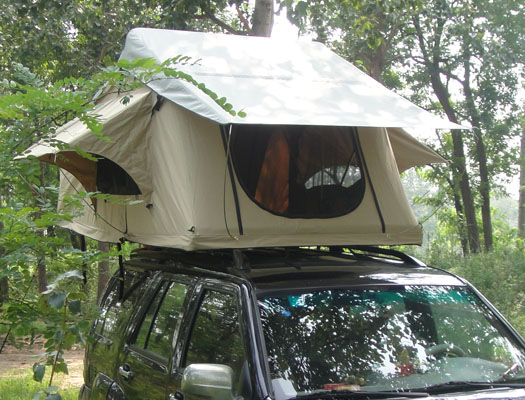
    For those who are considering purchasing a roof top tent for camping or long road trips, I would like to share my real experience so that you can make an informed decision. Prices range from a few hundred dollars to thousands of dollars, but my advice is: don’t go for the cheapest option. Travel safety is more important than saving a few dollars—after all, you don’t want to run into trouble when driving at 100 km/h in the middle of nowhere.

    HC-CL180 Soft Shell Roof Top Tent

    I chose the HC-CL180 Soft Shell Roof Top Tent, which is made of high-quality 280g cotton canvas and Oxford polyester fabric, with excellent waterproof and weatherproof performance. It’s very easy to set up — just open the door latch, push back the canopy, unzip the entrance, and pull out the sturdy aluminum telescopic ladder.

    180 Soft Shell Roof Top Tent

    The tent interior features a high-density bonded foam mattress with a removable cover, ensuring a comfortable night’s sleep. Optional zipper attachments are available to expand storage or living space. Dual sunshade support poles maintain stability in strong winds, while insect-proof windows and doors provide ventilation and protection from pests.

    Installation tips

    If your car has separate longitudinal and transverse roof racks, you can install the tent directly.
    If, like me, you have an integrated roof rack, you will need to add a high-quality crossbar to form a stable base.
    Both the tent and crossbar can be installed DIY, but the tent is heavy—it’s still difficult for two people to lift.
    Once installed, you may leave it on the car; it cannot fit in an elevator, and moving it home is impractical.

    Actual Performance

    1. Wind Noise

    Under strong wind conditions, noise becomes noticeable when driving over 120 km/h; in calm conditions or below that speed, noise is barely audible.

    2. Fuel Consumption

    A fully loaded 2.0T vehicle on a long-distance trip only sees an increase of 0.2–0.3 liters per 100 kilometers—negligible in my opinion.

    3. Wind Resistance

    Folded: Withstood an 8-level wind test in Xinjiang—the tent remained as sturdy as ever.
    Unfolded: In strong winds in Inner Mongolia, the tent swayed slightly but still felt secure.

    4. Waterproof Performance

    Withstood over two hours of moderate to heavy rain without any leaks.

    5. Insulation Performance

    In Xinjiang’s sub-zero temperatures, I stayed warm all night wearing a high-quality sleeping bag, thick blanket, and down jacket—proper gear is essential.

    6. Convenience

    Much more convenient than a ground tent—quick to open and close, with the sleeping bag able to be stored inside the tent, saving time and effort.

    7. Durability on Rough Terrain

    After 32,000 kilometers of travel, including some unpaved sections, stability was excellent as long as extreme off-road conditions were avoided.

    Although a roof top tent cannot completely replace a camper van, it is one of the most practical and economical mobile living solutions for frequent road trippers. While in some cases a roof top tent may be more convenient to set up, it is not only comfortable, but also provides a higher elevation (away from ground moisture and pests) and excellent camping views.

    Are you ready to turn your car into a mobile campsite? Roof top tents open up endless possibilities for off-grid adventures and spontaneous vacations. Sleep under the stars anywhere without sacrificing comfort, making every trip unforgettable.

  • Roof Top Tent Camping Essentials: Do You Know These?

    Roof Top Tent Camping Essentials: Do You Know These?

    Why Choose a Roof Top Tent for Camping?

    Roof top tents (RTTs) are rapidly gaining popularity among campers, off-road travelers, and SUV owners. Compared to traditional camping tents, SUV roof top tents offer a higher, safer, and more comfortable sleeping experience—perfect for off-road camping and outdoor adventures. Whether you’re planning a family trip, a solo off-road adventure, or a weekend getaway, a rooftop tent allows you to camp anywhere with ease.

    Roof Top Tent

    Key Benefits of Roof Top Tents

    • Quick setup: Most RTTs can be set up in minutes, saving you camping time.
    • Safe and comfortable: The elevated sleeping platform keeps you away from damp ground, insects, and wildlife.
    • All-terrain adaptability: Ideal for off-roading, overlanding, and remote camping areas.
    • Space-saving: Frees up interior luggage space in your car or SUV.

    Basic Requirements for Installing a Roof Top Tent

    Before choosing a roof top tent, make sure your vehicle meets the installation requirements:

    • Roof rack required: Roof top tents must be installed on a stable roof rack system. Never place the tent directly on the roof.
    • Vehicle compatibility: SUVs and off-road vehicles are best suited, but sedans or trucks can also be fitted with RTTs with the appropriate modifications.
    • Weight capacity: Make sure your roof rack and vehicle roof can support the weight—most RTTs weigh around 50-70 kg.

    Types of Roof Top Tents: Soft Shell vs. Hard Shell

    Roof top tents are mainly divided into two categories:

    1. Soft Shell Roof Top Tent

    Soft shell roof top tents are similar to the ordinary tents we set up on flat ground. The advantage is that they are inexpensive, generally costing between $400 and $700. However, the disadvantage is obvious: they are relatively complicated to set up.

    2. Hard Shell Roof Top Tent

    Hard shell roof top tents are very convenient to use and can be set up automatically with the push of a button. They generally cost more than $1,000. However, they are also relatively heavy, so you need to consider the convenience of carrying them and the load capacity of your car roof.

      Precautions for Using Roof Top Tents

      • Increased fuel consumption: Roof top tents usually weigh about 60 kg, which will increase the fuel consumption of the vehicle after installation. In addition, because roof top tents are not easy to transport, many people choose to permanently fix them to their cars, which will increase wind resistance and further increase fuel consumption.
      • Assembly and disassembly require multiple people: Because the tents are heavy, assembly and disassembly require multiple people. It is recommended to arrange for assistance before departure; otherwise, setting up the tent at the campsite may be challenging.
      • Be cautious when climbing the ladder: When staying on the roof, climbing the ladder at night is easy to slip and fall. Forgetting that you are on the roof and attempting to walk down directly is particularly dangerous. Therefore, extra caution is required when resting on the roof tent.
      • Easy to scratch when setting up and dismantling the tent: When setting up and dismantling the tent, please pay attention to the handling of items to avoid damaging the vehicle. Minor scratches can damage the paintwork, while more serious damage can cause dents.

      Is a Roof Top Tent Right for You?

      Roof top tents are ideal for people who value flexibility, comfort, and adventure. Whether you are an off-road explorer or a weekend camping enthusiast, there is a tent that suits your lifestyle:

      • Overlanding Tent: Ideal for long-distance adventures on rough terrain.
      • SUV Tent: Ideal for urban vehicles that are occasionally used for weekend getaways.
      • Family Roof Top Tent: Many models can accommodate 2-4 people, making them ideal for small families.

      Want to upgrade your camping gear? Browse our selection of hard shell tents, soft shell tents, and vehicle-mounted camping tents—all carefully selected for quality, durability, and outdoor performance.