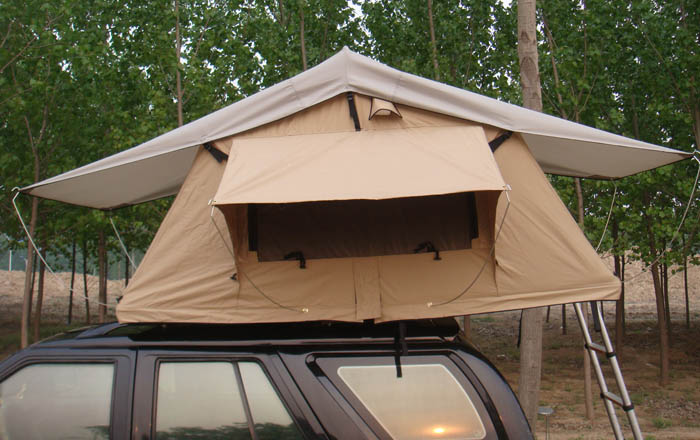
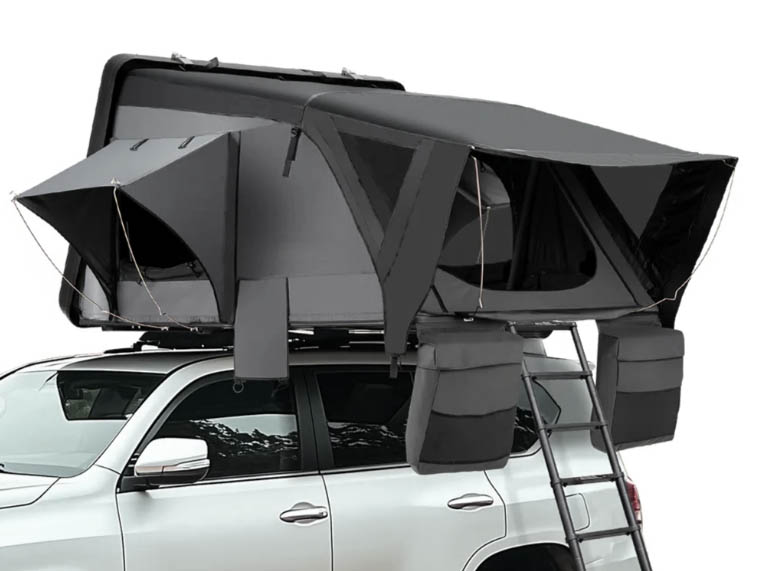
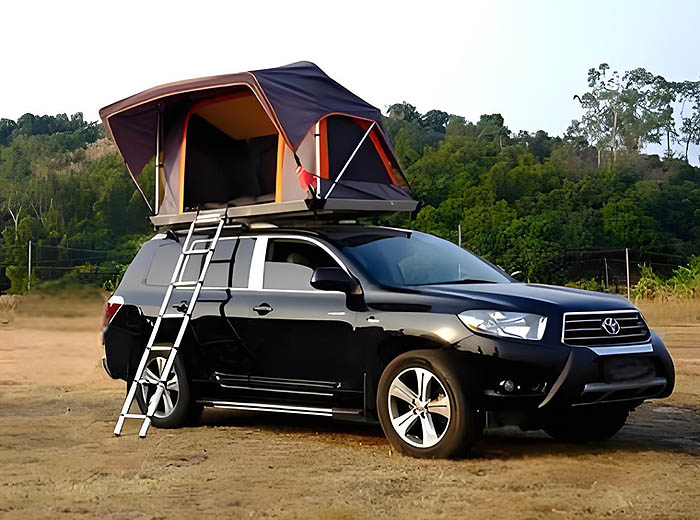
With the growing popularity of off-road travel and outdoor adventures, more people are choosing roof tents to meet their camping needs. While roof tents offer convenience and a unique sleeping experience, they also introduce significant air resistance and wind noise. These issues not only affect the vehicle’s fuel economy but also compromise driving comfort and stability.
So how can you reduce the wind resistance and noise caused by roof tents?
1. Choose a Low-Profile, Aerodynamic Roof Top Tent
The design and materials of a roof top tent critically influence its interaction with airflow. Typically, streamlined, low-profile hard-shell roof top tents offer greater aerodynamic advantages than bulky soft-shell tents. Many modern roof tents incorporate aerodynamic optimization through curved surfaces and integrated spoilers to slice through air more efficiently. Additionally, lightweight materials like aluminum and composite fabrics help reduce overall weight and wind resistance.
2. Install a Wind Deflector or Fairing
One of the most effective methods to reduce wind noise and drag is installing a spoiler (also known as a fairing). This accessory mounts to the front of roof racks or crossbars, helping to channel airflow upward and over the tent. By smoothing the transition between the windshield and the tent, fairings can significantly reduce flutter, noise, and resistance.
3. Use a Roof Rack Spoiler or Vortex Generators
For larger roof tents, adding a roof rack spoiler or vortex generator can further enhance aerodynamic performance. These devices help control air turbulence around the tent, reducing low-pressure zones behind it and thereby lowering wind resistance. Some aftermarket suppliers offer custom aerodynamic kits specifically designed for roof top tents.
4. Ensure Proper Installation and Regular Maintenance
Improperly installed roof top tents exacerbate wind resistance issues. Before departure, thoroughly inspect all mounting points, roof racks, and brackets for secure fastening. Over time, vibration can loosen bolts and fasteners, increasing noise and posing potential safety hazards. Regularly inspect and maintain your tent and roof rack system to ensure all components remain tight and in good condition.
5. Optimize Weight Distribution
How you load your vehicle and roof top tent affects handling and aerodynamics. Avoid overloading the roof, as excessive weight raises the vehicle’s center of gravity and increases wind resistance. Distribute weight evenly whenever possible, storing heavier items inside the cabin. Balanced loading improves fuel efficiency and driving stability.
6. Add Sound Damping Mats
To effectively reduce wind noise, consider installing sound damping mats or materials between the roof rack and the vehicle roof. These materials minimize vibrations and road noise transmitted into the cabin. Some users also line the interior of hard-shell tents with acoustic foam for a quieter sleeping environment.
7. Remove Accessories When Not in Use
Accessories like ladders, awnings, or storage boxes increase wind resistance and noise. If you’re not using them, consider removing them during transport. Some modern roof tents feature removable components specifically for this purpose.
8. Adjust Your Driving Habits
Sometimes, the simplest solution is to slow down. Wind noise and drag increase exponentially with speed. By maintaining moderate speeds, especially on highways, you can significantly reduce noise levels and improve fuel efficiency.
9. Consider Roof Top Tents with Integrated Spoilers
Some newer roof top tents feature built-in spoilers or deflectors. These integrated designs minimize the need for extra accessories and are engineered from the start to reduce wind resistance.
10. Test and adjust your setup
Every vehicle-roof tent combination is unique. Test your setup at various speeds and note noise sources. Minor adjustments to tent angle or positioning, or adding aftermarket aerodynamic aids, can yield significant results.
Roof top tents don’t inherently mean howling winds and soaring fuel consumption. By selecting the right tent, strategically using accessories like deflectors and spoilers, and maintaining your gear properly, you can enjoy a quiet and efficient off-road travel experience. Whether planning a weekend getaway or a cross-country expedition, these tips will help you fully embrace the joys of roof top camping.
For more guides on roof top tent installation, maintenance, and camping techniques, stay tuned to our website.
As road trips and overland travel grow increasingly popular, traditional camping methods often fail to meet travelers’ needs. Roof top tents (RTTs) have emerged as a game-changer, offering superior waterproofing, moisture resistance, protection from insects and snakes, comfort, and privacy. This article explores the practicality and comfort of roof top tents, compares them to sleeping inside vehicles, and highlights key factors to consider before purchasing.
Types of Roof Top Tents
Roof top tents come in various designs to suit different needs and budgets. Here are the most common types:
Soft shell RTTs are an affordable option, typically priced between ¥3,000 and ¥5,000. They offer more interior space but require manual setup, which can be time-consuming. These are ideal for campers who prioritize space and don’t mind spending extra time on installation.
Hard shell RTTs feature a durable exterior and are often equipped with electric motors for quick setup and takedown—sometimes in just seconds. While they are heavier and more expensive (starting at ¥6,000 and going up to tens of thousands), their convenience makes them a favorite among frequent travelers.
3. Hydraulic Semi-Automatic Roof Top Tents
Combining the best of both worlds, hydraulic RTTs offer quick deployment like hard shell models and the affordability of soft shell tents. They are currently the most popular type on the market. However, their space is somewhat limited, accommodating only 2–3 people.
Choosing the Right Rooftop Tent: If you enjoy hands-on setups and want to save money, a manual soft shell tent may be suitable. For those seeking convenience and speed, an automatic hard shell or hydraulic model is the way to go.
Is a Roof Top Tent Practical?
A roof top tent is an excellent investment for regular campers and overlanding enthusiasts. Here’s why:
Freedom and Flexibility: With an RTT, you’re not tied to hotel reservations or schedules. You can camp wherever the scenery captivates you—whether it’s a secluded beach or a mountain overlook.
Weather and Pest Resistance: Roof top tents are designed to withstand rain, wind, moisture, insects, and even snakes. Their elevated design also provides better insulation and noise reduction, ensuring a peaceful night’s sleep.
Cost-Effectiveness: While the initial investment (starting at ¥5,000) may seem high, frequent travelers can recoup the cost by saving on hotel expenses. In popular travel destinations like Xinjiang and Tibet, where accommodations are scarce or overpriced, an RTT pays for itself quickly.
However, if you only camp occasionally, a roof top tent may not be the most practical choice. For avid adventurers, though, it’s a worthwhile upgrade.
Roof Top Tent vs. Sleeping in Your Car: Which Is More Comfortable?
Many people have tried sleeping in their cars, only to face discomfort and inconvenience. Here’s a comparison:
1. Sleeping in Your Car:
Limited Space: The seats don’t allow for a fully stretched-out position, leading to poor sleep quality.
Ventilation Issues: In summer, the car can become stuffy and hot. Opening windows invites mosquitoes and compromises security.
Lack of Privacy: Changing clothes or moving around inside the car can be awkward, especially in crowded areas.
2. Roof Top Tent Advantages:
Spacious and Comfortable: Most RTTs can comfortably fit 2–3 people and come with thick, insulated mattresses for added comfort.
Better Airflow: Designed with ventilation in mind, RTTs allow fresh air to circulate without letting bugs in.
Privacy: The elevated design creates a secluded space, making it easy to change clothes or relax without worrying about prying eyes.
Roof Top Tent Pros and Cons
1. Pros:
Enhanced Safety: Elevated above the ground, RTTs keep you safe from wildlife, insects, and flooding. They also provide better protection against harsh weather conditions.
Convenience and Flexibility: With a roof top tent, you can turn any scenic spot into a campsite without worrying about hotel availability or prices.
Comfortable Sleeping Space: Unlike cramped car interiors, RTTs offer ample room to lie flat, move around, and enjoy a restful sleep.
Superior Privacy: The enclosed design ensures complete privacy, making it ideal for families and solo travelers alike.
2. Cons:
High Initial Cost: Roof top tents are significantly more expensive than ground tents. However, their durability and long-term savings on accommodations can justify the investment.
Increased Fuel Consumption: Adding a roof top tent (weighing around 60 kg) increases wind resistance and weight, leading to higher fuel costs—a important consideration with today’s gas prices.
Other Drawbacks: Rooftop camping isn’t suitable for those with a fear of heights. Additionally, installation and removal can be cumbersome, and accessing the tent may require a ladder, which some users find inconvenient.
How to Choose the Best Roof Top Tent for Your Needs
Before purchasing a roof top tent, consider the following:
Vehicle Compatibility: Ensure your car’s roof rack can support the tent’s weight.
Frequency of Use: Frequent campers should invest in a durable, automatic model, while occasional users may prefer a budget-friendly manual option.
Storage: Hard shell RTTs are easier to store when not in use, while soft shell models may require more space.
For outdoor enthusiasts prioritizing freedom and convenience, roof top tents offer a practical, comfortable, and secure solution. While requiring a higher upfront investment and potentially slightly increasing fuel consumption, their advantages—including privacy, weather resistance, and comfort—make them a superior alternative to traditional tents and car camping.
Whether planning weekend getaways or off-road road trips, a roof top tent can transform your travel experience, allowing you to explore freely without any worries.
With so many roof top tents available on the market, choosing the right one can be overwhelming. Whether you’re a weekend camping enthusiast or an off-road adventurer, mastering these key points will help you avoid common pitfalls!
More affordable, ideal for budget-conscious buyers
Compact when folded, suitable for small vehicles
✖ Disadvantages:
Longer setup time compared to hard-shell tents
Poorer aerodynamic performance while driving
Best suited for: Travelers seeking lightweight and cost-effective options.
Key Factors to Consider When Buying a Roof Top Tent
1. Vehicle compatibility and weight limits
Check the roof rack’s dynamic load capacity (weight limit while driving). Never exceed the vehicle’s maximum roof load—safety first! Consider the tent’s weight and passenger weight to ensure stability.
2. Tent weight and fuel efficiency
The roof top tent’s self-weight directly affects fuel consumption and handling. Mainstream hard-shell tents weigh approximately 50–70 kg, while high-quality soft-shell tents can be kept around 40 kg.
3. Materials and craftsmanship
The outer tent should be waterproof and durable (e.g., 600D Oxford fabric or higher), the frame should be made of aviation-grade aluminum, and details like zippers determine durability. Quick tip: 95% of users overlook checking the density of the inner tent’s breathable mesh, which is crucial for summer comfort!
4. Ease of Installation
Understand the installation complexity and required tools in advance. Some models offer “semi-permanent” installation, eliminating the hassle of repeated setup and takedown.
5. Price Range and Cost-Effectiveness
Entry-level soft-shell tents: $800–$2,000. Mid-to-high-end hard-shell tents: $2,500 – over $5,000. Ultra-light or luxury models: over $5,000
Final Tips Before You Buy
Test the setup process—some tents are harder to set up than others.
Read customer reviews to understand real-world performance.
Consider seasonal use — four-season tents offer better insulation.
If you have any questions, consult the warranty and customer service.
Safety compatibility is non-negotiable; clarify your needs before placing an order! By assessing weight limits, material quality, and ease of use, you are sure to find the perfect roof top tent for your travels. Happy camping!
Real-life experience with roof top tents: comprehensive analysis of pros and cons
As a seasoned camping enthusiast, I have tried various camping tents and ultimately chose a roof top tent (RTT). After many self-driving camping tests, I found that it does have unique advantages, but there are also some limitations. Below, I will analyze the pros and cons of roof top tents in detail in terms of comfort, convenience, and applicable scenarios, and give purchasing advice.
Eight advantages of roof top tents
Sleeping off the ground greatly improves comfort: Say goodbye to damp ground and dew penetration, with significant moisture and insect protection. The built-in high-density mattress is more comfortable than ordinary camping tents and provides higher quality sleep.
Excellent view, enjoy the beauty of camping: Wake up in the early morning to enjoy the sunrise and starry sky, and the high altitude view makes the camping experience more romantic.
Greater safety, away from wild animals: When camping in the wild, the off-ground design reduces snake and insect disturbances, making it particularly suitable for environments such as jungles and grasslands.
Quick to set up, saving time: Compared with traditional tents, roof top tents can be set up in 3-5 minutes, making them particularly suitable for self-driving tours and short camping trips.
Not picky about terrain, highly adaptable: As long as the vehicle can be parked (with all four wheels on the ground), it can be set up, regardless of the ground conditions or slope.
Saves space in the car and allows for more flexible luggage storage: The tent is fixed to the roof, allowing more camping equipment to be stored in the car or more people to ride in it.
Compact footprint, suitable for tight campsites: Only one parking space is required, eliminating the need for additional camping space, making it ideal for RV campgrounds, national parks, and other areas with strict space restrictions.
Keeps the interior clean for a more comfortable camping experience: A shoe bag is provided next to the ladder, requiring users to remove their shoes when entering or exiting the tent, reducing dirt and sand from entering and making cleaning easier.
Four major disadvantages of roof top tents
High price and large investment: Compared with ordinary camping tents, roof top tents usually cost between 5,000 and 20,000 yuan, with high-end hard-shell models being even more expensive.
Increases vehicle weight and affects fuel consumption: Long-term installation increases wind resistance, leading to higher fuel consumption (approximately 10%-15% increase).
Dependent on the vehicle, limiting flexibility: Once set up, the vehicle cannot be moved. If temporary travel is needed (e.g., for supplies), the tent must be packed up.
Complex installation requiring a roof rack: Some vehicle models require the installation of a roof rack. Improper installation may affect stability.
Roof Top Tent vs. Traditional Camping Tent: Which is more suitable for you?
Comparison items
Roof Top Tent
Traditional Camping Tent
Comfort
★★★★★ (off the ground and moisture-proof)
★★★ (depends on ground conditions)
Setup speed
★★★★★ (3-5 minutes)
★★★ (10-20 minutes)
Portability
★★ (vehicle-dependent)
★★★★★ (can be carried on foot)
Price
★★ (expensive)
★★★★★ (cost-effective)
Suitable scenarios
Self-driving camping, Long-distance travel
Backpacking, Wilderness survival
If you often go camping by car and want to improve your sleep quality and setup efficiency, then a roof top tent is definitely worth investing in! However, if you mainly go camping on foot or backpacking, a traditional tent may be more practical.
Would you choose a roof top tent? Feel free to share your camping experiences in the comments section!
Roof Top Tents are revolutionizing the outdoor experience for modern camping enthusiasts, with innovative camping equipment that transforms your car into a mobile bedroom in the sky. Roof Top Tents not only save time when compared to traditional ground tents, but also provide a comfortable sleeping environment away from wet floors and insect infestation. Especially when Roof Top Tent is used in combination with solar panels, campers can enjoy unprecedented convenience and freedom, truly realizing the dream of off-grid living.
Before installing your Roof Top Tent, it is important to double check the weight capacity of your roof rack. Most Roof Top Tents weigh between 50-150 kilograms, and with the weight of the user, the roof rack needs to withstand at least 200 kilograms of static load. To install, start by using high quality roof bars and follow the vehicle instructions to determine the correct mounting position. The tent base needs to be secured using professional grade stainless steel bolts, with anti-loosening washers at each connection point and tightened evenly to the recommended torque value.
When unfolding the tent, it is recommended that two people work together. Disengage all safety catches first and slowly push up the tent body to ensure that the support poles are fully locked into place. Modern Roof Top Tents tend to use a hydraulic assist system, making single person operation possible. When fixing all straps, attention should be paid to the even tension to avoid localized over-tightening leading to fabric deformation. As a special reminder, a test should be carried out on a safe site after the first installation to check the stability of all connection points.
The perfect integration solution for solar energy systems
Equipping Roof Top Tent with solar panels is the key to enhancing the camping experience. Flexible solar panels can be mounted directly on the outer surface of the tent without adding extra wind resistance. 200W solar system can generate about 1000Wh of electricity on a sunny day, enough to power cell phones, laptops, camping lights and small refrigerators. When choosing solar panels, monocrystalline panels are more efficient and suitable for roof mounting where space is limited.
A deep cycle battery, charge controller and inverter are required to install a solar system. Lithium-ion battery packs are recommended; they are lighter and last longer than traditional lead-acid batteries. Mount the controller in a dry location inside the vehicle and set the correct charging parameters to protect the batteries. The inverter power should be selected according to the largest power-using equipment, generally 1000W inverter can meet the needs of most camping electrical appliances.
Key Points for Safe Use of Roof Top Tent
Safety is always the primary concern when using a Roof Top Tent. All metal parts should be checked for cracks or deformation before each pitch, paying special attention to the state of hinges and support poles. In strong winds, the tent should be additionally reinforced and secured to ground anchors using windbreak ropes. When the tent is unfolded, ensure that all ladders are securely locked and check that the non-slip footings are in good condition.
A specially designed moisture barrier should be used inside the Roof Top Tent, not only to improve comfort but also to prevent condensation problems. It is vital to maintain proper ventilation inside the Roof Top Tent, most Roof Top Tents are equipped with multiple ventilation windows, all of which should be opened in hot weather to create air convection. For winter use, insulation can be added to the tent to reduce heat loss.
Professional Maintenance Tips
The long-term performance of a Roof Top Tent depends on routine maintenance. After each camping trip, dust and debris should be removed from the surface of the tent using a soft bristle brush. Stubborn stains can be gently scrubbed with neutral detergent and warm water, avoiding the use of strong chemical cleaners. The tent can only be stowed away when it is completely dry, and can be treated with the help of a portable dehumidifier in humid environments.
Metal parts should be coated with special lubricant every quarter to prevent rusting. Regularly check the seams for wear and tear, and promptly repair small cracks with tent-specific glue. For long term storage, it is recommended to hang the tent partially unfolded to avoid permanent wrinkles from folding the material for a long time. Solar panels should be cleaned with a microfiber cloth to keep the surface unobstructed to ensure the best power generation efficiency.
Suggestions for Choosing Roof Top Tent
When choosing a Roof Top Tent, you should consider the frequency of camping, number of users and seasonal factors. Hard-shell Roof Top Tent has less wind resistance and is more durable, suitable for long-term use; soft-shell tents are more affordable and have a smaller storage volume. A two-person tent usually weighs about 60kg, while a four-person tent can weigh up to 120kg, which must match the carrying capacity of the vehicle.
Well-known brands such as Thule, Tepui and Heching offer a wide choice of models, from budget to luxury. Higher-end models are equipped with integrated LED lighting, USB charging ports and reinforced insulation to greatly enhance the experience. It is recommended to check out the different models in the field at a professional outdoor equipment store to understand the specific dimensions and features before making a decision.
Optimized Configuration of Solar Power System
When designing the solar power supply system, the electricity demand should be accurately calculated. The average camper needs about 200-500Wh of electricity per day, including cell phone charging, lights and small electrical appliances. Equipped with 100-200W solar panel and 100-200Ah battery can meet the basic demand. If you use high power devices such as electric blankets or small rice cookers, you will need more than 300W solar panels and higher capacity batteries.
MPPT charge controllers are more efficient than PWM models and are particularly suitable for energy harvesting under cloudy conditions. System wiring should be done with sufficiently thick cables to minimize energy loss. For easy monitoring, a digital meter can be installed to display the battery status in real time. Consider adding a 12V car socket to directly power the camping equipment to avoid energy conversion losses from the inverter.
Practical tips for four-season camping
Roof Top Tent is suitable for year-round use, but different seasons require special preparation. In summer, you should choose a light-colored tent to reduce heat absorption, with a portable fan to promote air circulation. When camping in winter, add an insulating pad between the Roof Top Tent and the roof and use a low-temperature sleeping bag to keep warm. In the rainy season, make sure the waterproof coating of the tent is intact, and pay attention to choosing a slightly inclined position to avoid water accumulation when setting up.
In spring and fall there is a big difference in temperature, so it is recommended to use a multi-layer sleeping bag system to make it easier to regulate the temperature. Whenever possible, weather warnings should be incorporated into trip planning and timely evacuation before inclement weather. Roof Top Tent is solid but still risky in extreme weather conditions, safety always comes first.
Best practices for eco-friendly camping
The modern camper should embrace the principle of “Leave No Trace”. Using solar power is an eco-friendly choice in itself, reducing generator noise and pollution. Choose reusable cutlery and water bottles and avoid disposable plastics. Use biodegradable cleaning products for washing up and waste water should be dumped in leach pits away from water sources.
At the end of your camping trip, scrutinize your surroundings and take away all garbage including food scraps. Respect wildlife by not feeding or disturbing them. Use environmentally friendly insect repellents instead of chemical sprays to protect the ecosystem. With these simple measures, every camper can contribute to the protection of the natural environment.
In-depth Analysis of Common Roof Top Tent Problems
Many first-time Roof Top Tent users are concerned about vehicle compatibility. In fact, as long as the static load-bearing capacity of the roof meets the standard, most SUVs, station wagons and even some cars can be installed. Special reminder, after the installation of the vehicle’s center of gravity rises, should adjust the driving habits, cornering appropriate deceleration. When driving on the highway, the wind noise of hard-shell tents is usually 3-5 dB lower than that of soft-shell tents.
A common question about solar energy systems is the efficiency of power generation. In fact, even on cloudy days, modern solar panels can still produce 25-40% of their rated power. When the sun angle is low in the winter, the angle of the panels can be temporarily adjusted to improve efficiency. The key to system maintenance is to keep the batteries from over-discharging; deep discharges can significantly shorten battery life.
Roof Top Tent durability is also a concern. The service life of high-quality products can reach 8-10 years, the key is in regular maintenance. As a special reminder, prolonged exposure to UV rays will accelerate fabric aging, so try to stow it away or use a protective cover when not in use. Choose a model with a reinforced aluminum alloy frame for greater wind resistance and suitability for a wide range of outdoor environments.