
Tag: Roof Top Tent Recommendation

  • Roof Top Tent: the new favorite of travelers, a full analysis of its advantages and disadvantages

    Roof Top Tent: the new favorite of travelers, a full analysis of its advantages and disadvantages

    What is a Roof Top Tent? Why it becomes the first choice of travelers?

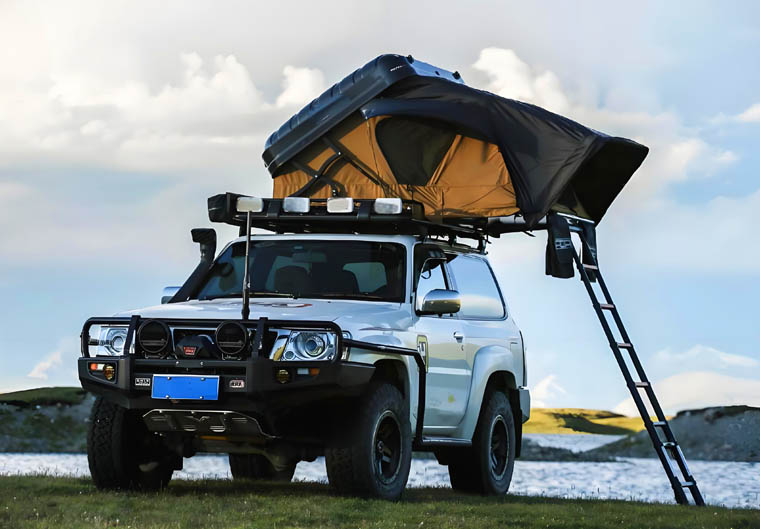
    Roof Top Tent (RTT) is a kind of portable camping equipment installed on the roof of a car, providing outdoor enthusiasts with a comfortable and safe accommodation experience. Unlike traditional ground tents, Roof top tent makes full use of the space on top of the vehicle, allowing campers to stay away from wet ground, snake and insect infestation, while providing a broader view. In recent years, with the rise of self-driving tours and camping culture, Roof Top Tent has become popular among owners of SUVs, crossovers, station wagons and even some sedans.

    Roof Top Tent

    Roof top tents are available in a wide range of prices, from ¥2,000 for economical models to ¥10,000 for high-end fully automatic models, meeting the needs of users with different budgets. Whether it is a short weekend camping or long-distance travel through the trip, Roof Top Tent can provide convenient accommodation solutions, so that travelers can really realize the “go with the stop, free camping” lifestyle.

    Roof Top Tent three types: which one is the most suitable for you?

    1.Manual Roof Top Tent (Economical and Practical)

    Manual unfolding Roof top tent is the most common type in the market, which is suitable for users with limited budget but pursuing practicality. These tents are usually made of high-strength canvas or polyester fabrics with aluminum alloy or steel brackets to provide stable support.

      Advantages:

      • Affordable price, suitable for users who are trying car roof camping for the first time.
      • The interior is spacious and can easily accommodate 2-3 people, and some models come with an extended awning to provide additional space for activities.
      • Flexible, users can build an enclosure next to the car for changing clothes, washing up or outdoor cooking.

      Suitable for: Camping enthusiasts who are looking for cost-effective, like DIY construction and don’t mind manual operation.

      2. Electric Roof Top Tent (High-end Convenience)

      Electric Roof top tent adopts motor drive and can be unfolded or stowed in 10 seconds with just one button operation, saying goodbye to the cumbersome process of setting up a traditional Roof Top Tent.

        Advantages:

        • Extremely fast opening and closing, saving time and physical strength, especially suitable for long-distance travelers who frequently change campsites.
        • Stronger waterproof and windproof performance, with high-density fabric and reinforced frame, it can cope with bad weather.
        • Streamlined design reduces wind resistance and reduces the impact of fuel consumption when traveling at high speed.

        Suitable for: Users who pursue efficiency and convenience, have sufficient budget, and often go off-road or long-distance self-driving.

        3. Helicopter Roof Top Tent (Lightweight Extreme)

        Roof top tent is the upgraded version of electric tent, adopting fiberglass or lightweight aluminum alloy shell, which is smaller in size and faster in opening after storage.

          Advantages:

          • Ultra-fast unfolding, can be set up in 5-8 seconds, suitable for temporary parking and rest.
          • Stylish appearance, almost integrated with the roof after stowed, does not affect the overall beauty of the vehicle.
          • Lighter weight, lower load-bearing requirements on the roof, suitable for small SUVs or cars.

          Disadvantages: relatively small internal space, suitable for 1-2 people, and the price is high.
          Suitable for: focus on appearance, the pursuit of extreme building, single or double travelers.

          Which models are suitable for installing Roof Top Tent?

          Roof top tent can be installed only if the vehicle is equipped with a roof rack with sufficient load-bearing capacity. The suitability of different vehicle models is as follows:

          1. Off-road vehicles & SUVs (best choice)

          • Recommended models: Toyota Prado, Jeep Wrangler, Land Rover Defender, Haval H9 and so on.
          • Advantage: Roof top tent has a strong structure, and the original luggage rack has a strong load-bearing capacity (usually more than 75kg), which can easily support the weight of Roof Top Tent and users.

          2. Station wagon & MPV (need to install reinforced luggage rack)

          • Recommended models: Volkswagen Azera, Volvo V90, Buick GL8, etc.
          • Note: Installation of special crossbar or longitudinal bar is required to ensure that the load-bearing capacity meets the standard (it is recommended to choose a luggage rack with a dynamic load of ≥75kg).

          3. Sedan (need to choose carefully)

          • Applicable models: Some sedans with strong roof structure, such as Subaru Outback, Audi A4 Allroad, etc.
          • Limitations: Extra reinforcement of the Roof Top Tent is required and a lightweight Roof Top Tent (e.g. Helicopter Auto model) is selected.

            Roof Top Tent Weight Bearing Tip:

            • Roof Top Tent weighs about 50-70kg, plus the user’s weight (usually 150-240kg), the total roof load should be within the vehicle’s allowable range.
            • It is recommended to choose separated vertical or horizontal poles to ensure stability and keep about 4cm spacing between Roof top tent and bottom of Roof top tent to optimize aerodynamics.

            5 Core Advantages of Roof Top Tent

            1. Camping anywhere, anytime, free from hotel restrictions

            • No need to book accommodation in advance, you can spend the night in scenic spots, lakeside, mountain tops and any other places.
            • Especially suitable for traveling in remote areas, such as Tibet, Xinjiang, Inner Mongolia and other hotels are scarce.

            2. Safe and comfortable, away from ground moisture and pests

            • High off the ground design to avoid snake, insect, rat and ant infestation, built-in moisture-proof pad to enhance sleeping comfort.
            • High-strength fabrics can withstand grade 8 wind, heavy rain and even snow pressure, suitable for a variety of climatic conditions.

              3. Free up space in the car to enhance travel convenience

              • No need to sleep in the car, more luggage or equipment can be stored, suitable for long-distance family trips.
              • Some models come with a storage bag, which can store sleeping bags, pillows and other items.

              4. Excellent viewing experience, enjoy the natural scenery to the fullest

              • You can open the tent in the morning to enjoy the sunrise, seascape or snowy mountains, and lie down to watch the starry sky at night.
              • Some models are equipped with panoramic skylights or side windows to enhance ventilation and lighting.

              5. Long-term use is more economical and saves accommodation expenses.

              • Once invested, long-term use, especially suitable for frequent camping users, more cost-effective than hotels.

                How to choose the best Roof Top Tent for you?

                1. Choose the suitable model according to the car model

                • Crossover/SUV → Manual or electric models are available.
                • Sedan/MPV → Lightweight helicopter-type automatic model is preferred.

                2. Pay attention to the key performance parameters

                • Waterproof level: at least 3000mm water pressure to ensure no leakage in heavy rain.
                • Wind resistance: support more than 8 levels of wind, preferably aviation aluminum frame material.
                • Breathability: with screen doors and windows to prevent mosquitoes from entering and maintain air circulation.
                • Thermal insulation: double-layer design or thickened fabric, suitable for use in high-cold areas.

                3. Installation and Convenience

                • Ladder position: left/right side installation is the most common, rear installation may affect the trunk opening.
                • Height after storage: Try to choose low wind resistance design to avoid increasing fuel consumption.

                4. Brand and after-sales service

                • Recommended Brands: Thule, Yakima, Heching, Roam Adventure Co.
                • Prioritize products that offer more than 3 years warranty to ensure long-term durability.

                  Start your new era of car roof camping

                  Roof top tent is not only a camping equipment, but also represents a free and adventurous lifestyle. Whether it’s a short weekend getaway or a months-long trip around the world, it can provide you with a safe and comfortable mobile shelter. By choosing a tent that suits your car and your needs, installing it properly and mastering the skills of using it, you can truly realize the dream of “traveling the world with your car and making it your home anywhere”.

                  Ready to upgrade your traveling experience? Start exploring the best Roof Top Tent for you now!

                1. Roof Top Tent and Solar Panels: The Perfect Combination for a Comfortable and Convenient Sky Camping Experience

                  Roof Top Tent and Solar Panels: The Perfect Combination for a Comfortable and Convenient Sky Camping Experience

                  The Roof Top Tent Revolutionizes Camping

                  Roof Top Tents are revolutionizing the outdoor experience for modern camping enthusiasts, with innovative camping equipment that transforms your car into a mobile bedroom in the sky. Roof Top Tents not only save time when compared to traditional ground tents, but also provide a comfortable sleeping environment away from wet floors and insect infestation. Especially when Roof Top Tent is used in combination with solar panels, campers can enjoy unprecedented convenience and freedom, truly realizing the dream of off-grid living.

                  HC-CL180 Soft Shell Roof Top Tent
                  HC-CL180 Soft Shell Roof Top Tent

                  Detailed Installation Guide for Roof Top Tent

                  Before installing your Roof Top Tent, it is important to double check the weight capacity of your roof rack. Most Roof Top Tents weigh between 50-150 kilograms, and with the weight of the user, the roof rack needs to withstand at least 200 kilograms of static load. To install, start by using high quality roof bars and follow the vehicle instructions to determine the correct mounting position. The tent base needs to be secured using professional grade stainless steel bolts, with anti-loosening washers at each connection point and tightened evenly to the recommended torque value.

                  When unfolding the tent, it is recommended that two people work together. Disengage all safety catches first and slowly push up the tent body to ensure that the support poles are fully locked into place. Modern Roof Top Tents tend to use a hydraulic assist system, making single person operation possible. When fixing all straps, attention should be paid to the even tension to avoid localized over-tightening leading to fabric deformation. As a special reminder, a test should be carried out on a safe site after the first installation to check the stability of all connection points.

                  The perfect integration solution for solar energy systems

                  Equipping Roof Top Tent with solar panels is the key to enhancing the camping experience. Flexible solar panels can be mounted directly on the outer surface of the tent without adding extra wind resistance. 200W solar system can generate about 1000Wh of electricity on a sunny day, enough to power cell phones, laptops, camping lights and small refrigerators. When choosing solar panels, monocrystalline panels are more efficient and suitable for roof mounting where space is limited.

                  Solar Roof Top Tent

                  A deep cycle battery, charge controller and inverter are required to install a solar system. Lithium-ion battery packs are recommended; they are lighter and last longer than traditional lead-acid batteries. Mount the controller in a dry location inside the vehicle and set the correct charging parameters to protect the batteries. The inverter power should be selected according to the largest power-using equipment, generally 1000W inverter can meet the needs of most camping electrical appliances.

                  Key Points for Safe Use of Roof Top Tent

                  Safety is always the primary concern when using a Roof Top Tent. All metal parts should be checked for cracks or deformation before each pitch, paying special attention to the state of hinges and support poles. In strong winds, the tent should be additionally reinforced and secured to ground anchors using windbreak ropes. When the tent is unfolded, ensure that all ladders are securely locked and check that the non-slip footings are in good condition.

                  A specially designed moisture barrier should be used inside the Roof Top Tent, not only to improve comfort but also to prevent condensation problems. It is vital to maintain proper ventilation inside the Roof Top Tent, most Roof Top Tents are equipped with multiple ventilation windows, all of which should be opened in hot weather to create air convection. For winter use, insulation can be added to the tent to reduce heat loss.

                  Professional Maintenance Tips

                  The long-term performance of a Roof Top Tent depends on routine maintenance. After each camping trip, dust and debris should be removed from the surface of the tent using a soft bristle brush. Stubborn stains can be gently scrubbed with neutral detergent and warm water, avoiding the use of strong chemical cleaners. The tent can only be stowed away when it is completely dry, and can be treated with the help of a portable dehumidifier in humid environments.

                  Metal parts should be coated with special lubricant every quarter to prevent rusting. Regularly check the seams for wear and tear, and promptly repair small cracks with tent-specific glue. For long term storage, it is recommended to hang the tent partially unfolded to avoid permanent wrinkles from folding the material for a long time. Solar panels should be cleaned with a microfiber cloth to keep the surface unobstructed to ensure the best power generation efficiency.

                  Suggestions for Choosing Roof Top Tent

                  When choosing a Roof Top Tent, you should consider the frequency of camping, number of users and seasonal factors. Hard-shell Roof Top Tent has less wind resistance and is more durable, suitable for long-term use; soft-shell tents are more affordable and have a smaller storage volume. A two-person tent usually weighs about 60kg, while a four-person tent can weigh up to 120kg, which must match the carrying capacity of the vehicle.

                  Well-known brands such as Thule, Tepui and Heching offer a wide choice of models, from budget to luxury. Higher-end models are equipped with integrated LED lighting, USB charging ports and reinforced insulation to greatly enhance the experience. It is recommended to check out the different models in the field at a professional outdoor equipment store to understand the specific dimensions and features before making a decision.

                  Optimized Configuration of Solar Power System

                  When designing the solar power supply system, the electricity demand should be accurately calculated. The average camper needs about 200-500Wh of electricity per day, including cell phone charging, lights and small electrical appliances. Equipped with 100-200W solar panel and 100-200Ah battery can meet the basic demand. If you use high power devices such as electric blankets or small rice cookers, you will need more than 300W solar panels and higher capacity batteries.

                  MPPT charge controllers are more efficient than PWM models and are particularly suitable for energy harvesting under cloudy conditions. System wiring should be done with sufficiently thick cables to minimize energy loss. For easy monitoring, a digital meter can be installed to display the battery status in real time. Consider adding a 12V car socket to directly power the camping equipment to avoid energy conversion losses from the inverter.

                  Practical tips for four-season camping

                  Roof Top Tent is suitable for year-round use, but different seasons require special preparation. In summer, you should choose a light-colored tent to reduce heat absorption, with a portable fan to promote air circulation. When camping in winter, add an insulating pad between the Roof Top Tent and the roof and use a low-temperature sleeping bag to keep warm. In the rainy season, make sure the waterproof coating of the tent is intact, and pay attention to choosing a slightly inclined position to avoid water accumulation when setting up.

                  In spring and fall there is a big difference in temperature, so it is recommended to use a multi-layer sleeping bag system to make it easier to regulate the temperature. Whenever possible, weather warnings should be incorporated into trip planning and timely evacuation before inclement weather. Roof Top Tent is solid but still risky in extreme weather conditions, safety always comes first.

                  Best practices for eco-friendly camping

                  The modern camper should embrace the principle of “Leave No Trace”. Using solar power is an eco-friendly choice in itself, reducing generator noise and pollution. Choose reusable cutlery and water bottles and avoid disposable plastics. Use biodegradable cleaning products for washing up and waste water should be dumped in leach pits away from water sources.

                  At the end of your camping trip, scrutinize your surroundings and take away all garbage including food scraps. Respect wildlife by not feeding or disturbing them. Use environmentally friendly insect repellents instead of chemical sprays to protect the ecosystem. With these simple measures, every camper can contribute to the protection of the natural environment.

                  In-depth Analysis of Common Roof Top Tent Problems

                  Many first-time Roof Top Tent users are concerned about vehicle compatibility. In fact, as long as the static load-bearing capacity of the roof meets the standard, most SUVs, station wagons and even some cars can be installed. Special reminder, after the installation of the vehicle’s center of gravity rises, should adjust the driving habits, cornering appropriate deceleration. When driving on the highway, the wind noise of hard-shell tents is usually 3-5 dB lower than that of soft-shell tents.

                  A common question about solar energy systems is the efficiency of power generation. In fact, even on cloudy days, modern solar panels can still produce 25-40% of their rated power. When the sun angle is low in the winter, the angle of the panels can be temporarily adjusted to improve efficiency. The key to system maintenance is to keep the batteries from over-discharging; deep discharges can significantly shorten battery life.

                  Roof Top Tent durability is also a concern. The service life of high-quality products can reach 8-10 years, the key is in regular maintenance. As a special reminder, prolonged exposure to UV rays will accelerate fabric aging, so try to stow it away or use a protective cover when not in use. Choose a model with a reinforced aluminum alloy frame for greater wind resistance and suitability for a wide range of outdoor environments.