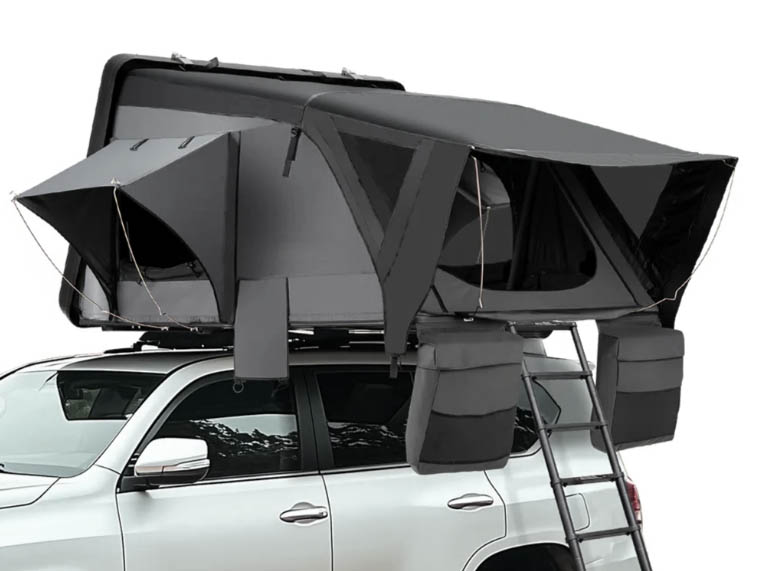
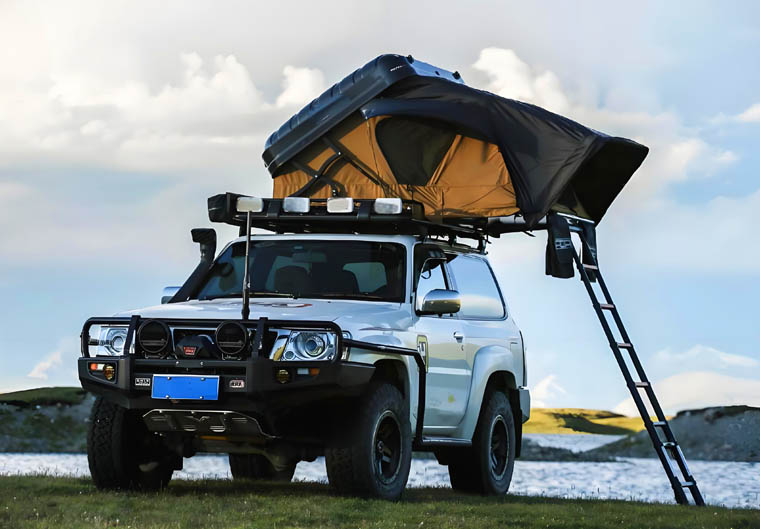
Portable camping solutions have evolved dramatically. While roof top tent (RTT) setups have dominated the overlanding market for years, a new challenger is gaining traction for its convenience and accessibility: the rear tent. Specifically, the hydraulic fast-pitch soft shell rear tent is redefining what it means to set up camp in seconds.
Unlike traditional ground tents that require wrestling with flexible poles or bulky roof top tent clamshells that add significant weight to your vehicle’s suspension, the hydraulic rear tent utilizes a mechanical advantage that bridges the gap between luxury and practicality.
The Technology:
The “hydraulic pop-up” mechanism is not just a marketing gimmick; it is a sophisticated mechanical design rooted in industrial engineering. You often see similar hydraulic tappet systems in high-end medical stretchers and aircraft boarding stairs—scenarios where speed and reliability are non-negotiable.
How it works: The system relies on the principle of incompressible fluid transmission. Sealed hydraulic cylinders (often gas-assisted or oil-damped) convert minimal human input into a high-force, high-stroke lifting action. When you deploy a soft shell rear tent with this technology, you aren’t fighting spring-back tension. Instead, the hydraulic rods “lock” the frame into place, providing immediate rigidity.
Advantages over traditional tents:
Smooth operation: Unlike mechanical springs that “snap” violently, hydraulics offer a slow, controlled, and silent extension.
Cold weather reliability: Hydraulic fluid maintains viscosity in low temperatures, ensuring the tent opens fully even during winter overlanding trips, whereas standard springs can become brittle.
Longevity: With fewer friction points, these systems resist metal fatigue better than traditional pop-up tent hubs.
Real-World Test: Surviving the Mountain Storm
Last weekend, during a solo overlanding trip at 1,600 meters (5,200 feet), the fast-pitch rear tent proved its worth. At 3 AM, a sudden alpine squall rolled in. The wind was gusting, and rain was starting to blow sideways.
There was no time to peg down a complex flysheet or thread tent poles. I backed the SUV into the wind, unzipped the storage bag, and pulled the fabric towards the rear bumper. The hydraulic roof support system engaged with a satisfying “thud.” Instantly, the soft shell expanded taut, and the integrated vestibule extended automatically.
Performance metrics:
Weather resistance: The 300D Oxford fabric with a PU3000mm coating handled the deluge effortlessly. Water beaded up instantly (showing intact surface tension) and rolled off the eaves rather than soaking in.
Stability: Despite the fabric vibrating in the wind, the hydraulic tent frame remained motionless. The rigid hydraulic struts absorbed lateral force, preventing the “flapping” noise typical of nylon dome tents.
Comfort: The interior remained dry. The dual-layer windows allowed for cross-ventilation without letting mosquitoes in, while the blackout flap meant I wasn’t woken by dawn glare.
Key Features to Look For in a Quality Rear Tent
To ensure you are buying a tent that ranks high in durability, look for these manufacturing specs:
Hydraulic Cylinder Quality: Look for “German hydraulic rods” or “sealed tappet systems.” These provide the smoothest lift and hold the heaviest loads.
Fabric Denier (D): 210D is standard. 600D to 800D is military-grade and far more tear-resistant. Ensure the floor is a heavier denier than the fly.
Seam Sealing: Avoid leaky tents by ensuring factory-taped seams. Poor waterproofing is the #1 complaint in cheap automatic tents.
Insulation: A “full flysheet” design (where the rainfly reaches the ground) prevents condensation buildup, a common issue in single-wall, fast-pitch setups.
The Future of Overlanding The fast-pitch soft shell rear tent represents a shift toward minimalist, efficient design. It removes the barrier to entry for those intimidated by roof top tent installation or heavy gear. By utilizing hydraulic support technology, these tents offer a “set it and forget it” reliability that allows you to focus on the adventure, not the setup.
Whether you drive a massive SUV or a compact wagon, this gear transforms your vehicle into a cozy, weather-proof retreat in the time it takes to take a deep breath.
For SUV owners, the right gear elevates camping and road trips to new heights of comfort, versatility, and adventure. SUV-adaptable tents and roof top tents (RTTs) revolutionize outdoor travel by offering unmatched convenience and functionality. These innovative car camping tents integrate seamlessly with your vehicle, creating flexible campsites without compromising comfort. Whether you’re an off-road enthusiast, family camper, or weekend getaway traveler, this guide delves into everything you need to know about SUV tents and roof top tents to elevate your journey experience.
What are SUV tents and roof top tents?
SUV tents refer to portable shelter systems designed specifically for SUVs, which attach or integrate onto the vehicle. Primary categories include:
Roof Top Tents (RTT): Hard-shell or soft-shell tents permanently or semi-permanently mounted on the vehicle’s roof rack or crossbars. They unfold upward or sideways to create an elevated sleeping area.
SUV Annex Tents (Side Awings & Rear Tents): These include side awnings and rear hatch tents that attach to the vehicle’s sides or rear, creating extended living space, screened-in rooms, or weatherproof entrances.
Hybrid & Expandable Designs: Some models combine multiple functions, such as a roof top tent with an attached room or a ground tent directly connecting to the SUV’s tailgate.
The primary purpose of these vehicle attached tents is to expand an SUV’s utility, enhancing convenience, comfort, and safety for off-road camping, road trips, and outdoor adventures.
Advantages of SUV Tents and Roof Top Tents
Superior Comfort and Convenience: Directly attached to your SUV, they allow easy access to the vehicle’s air conditioning, 12V power outlets, and stored gear. Roof top tents typically feature built-in high-density camping mattresses, offering far greater sleeping comfort than traditional ground tents.
Enhanced Safety and Elevated Sleeping Height: A key advantage of rooftop tents is their elevated sleeping platform. This effectively isolates you from ground moisture, wildlife disturbances, and uneven terrain, ensuring a dry and secure sleeping environment—crucial for off-road travel safety.
Maximized Space Utilization and Versatility: These tents can create multi-room layouts. The main roof top tent serves as the sleeping area, while side awnings or annex tents provide sheltered spaces for cooking, dining, or storage. This modular design is ideal for family camping and extended trips.
Enhanced weather protection: Premium SUV camping tents utilize high-strength polyester or tear-resistant nylon fabrics with exceptional waterproof ratings (e.g., 3000mm+). Seamless vehicle integration creates sealed entrances, delivering superior protection against rain, wind, and insects.
Quick Setup and Packing: Modern roof top tents utilize pneumatic poles for assisted opening, while SUV rooftop tents feature quick-open or roll-up designs. This allows you to set up camp in minutes, saving time and energy after long drives.
Key Considerations When Choosing
Vehicle Compatibility and Load Capacity: Ensure the tent matches your SUV model and that your roof rack system can handle its dynamic (while driving) and static (at rest) loads. Carefully review installation requirements.
Materials and Construction: Opt for durable, weatherproof fabrics with UV-resistant coatings. Aluminum or steel poles and reinforced stitching at stress points are crucial for ensuring the tent’s longevity across all seasons.
Ventilation and Climate Control: Optimal designs incorporate mesh windows, roof vents, and optional rain covers to manage condensation and airflow. Some premium models even accommodate 12V fans or portable heaters.
Additional Practical Features: Consider integrated LED light strips, gear baskets, shoe storage, and ladder access for easy entry/exit. For roof top tents, the hard-shell vs. soft-shell debate centers on aerodynamics, setup speed, and profile.
Primary Uses and Applications
Off-road Travel and Wilderness Exploration: Roof top tents are the gold standard for off-road adventures, providing quick, reliable shelter across unpredictable terrain. Their rapid setup makes them ideal for stealth camping or daily campsite changes.
Family Road Trips and Basecamps: An SUV with a roof top tent, paired with a large side awning or annex room, creates the perfect family campsite. Kids can sleep elevated, while the awning provides a communal space for meals and relaxation.
Festivals and Outdoor Camping: These tents offer private, comfortable retreats during events. Their distinctive setup also fosters a strong sense of community among fellow road-tripping campers.
Photography and Adventure Sports: The roof top tent’s quick setup and elevated vantage point are perfect for photographers and explorers needing to depart early in remote locations.
Your Outdoor Experience
For any outdoor enthusiast, investing in a roof top tent or SUV attached tent system is a transformative change. It seamlessly blends the freedom of exploration with the comfort of a private sanctuary, transforming your vehicle into the ultimate adventure companion. From minimalist-friendly hard-shell roof top tents to spacious SUV tent annexes for family trips, the right setup unlocks endless possibilities for camping and road trips.
Ready to find your perfect SUV camping solution?
Explore our curated selection of premium roof top tents, SUV awnings, and integrated camping systems. We offer solutions for every vehicle type and adventure style, always prioritizing quality, durability, and smart design. Contact us today for personalized advice or browse our online catalog to start your journey toward unforgettable overlanding and car camping experiences.
Are you considering upgrading your camping gear with a roof top tent but unsure if it’s right for you? Or perhaps you’re leaning toward a rear hatch tent because it’s more budget-friendly and easier to carry? In this guide, we’ll compare both types of vehicle-mounted tents to help you determine which best suits your travel style, vehicle type, and camping preferences.
What Is a Roof Top Tent (RTT)?
A roof top tent, often abbreviated as RTT, is a portable shelter designed to be mounted on the roof of your vehicle. It’s especially popular among overlanders, road-trippers, and off-road enthusiasts who value comfort and convenience while camping in diverse terrains.
Installation Requirements for a Roof Top Tent
Before investing in a car rooftop tent, make sure your vehicle is equipped to handle it. Not every car is suitable right out of the gate.
Roof Rack Needed: Your vehicle must have a sturdy roof rack or crossbars capable of supporting significant weight. SUVs and 4x4s are ideal, but sedans and smaller cars can also be fitted with aftermarket heavy-duty racks.
Weight Considerations: A typical roof top tent weighs between 70–90 kg (155–200 lbs). Add the weight of two or three occupants (150–240 kg), and you’ll need a roof rack rated for dynamic (moving) and static (parked) loads.
Pros of Roof Top Tents
Versatile Setup: A roof top tent can be set up anywhere your vehicle can go—beach, forest, or rocky terrain. It keeps you elevated from wet or uneven ground.
All-Weather Durability: Made from high-quality materials such as reinforced polyester or canvas, and often featuring a robust aluminum or steel frame, RTTs offer excellent protection against rain, wind, and UV rays. The built-in mattress adds comfort and insulation.
Security & Pest Protection: Being elevated helps keep you safe from wildlife and insects. It also keeps the sleeping area clean and dry.
Easy Storage: Most roof top tents come with a travel-friendly cover, making setup and takedown quick and hassle-free.
Cons of Roof Top Tents
Vehicle Compatibility & MPG Impact: Not all vehicles can support an RTT. Also, the added height and weight increase wind resistance, which can raise fuel consumption by up to 10%.
Accessibility: You’ll need to use a ladder to climb in and out, which can be inconvenient, especially at night.
Permanent Fixture: While easy to deploy, RTTs are cumbersome to remove entirely. Weighing over 50 kg, they’re not designed for frequent installation and removal.
Cost: High-quality roof top tents are a significant investment, with prices often ranging from $1,000 to $4,000.
What Is a Rear Hatch Tent?
A rear hatch tent, also known as a tailgate tent, attaches to the back of your SUV or hatchback vehicle. It extends the living space of your car and is ideal for campers who want quick access to their vehicle’s interior.
Pros of Rear Hatch Tents
Spacious & Integrated Design: This type of tent connects directly to your open tailgate, creating a seamless transition from your car’s cargo area to the sleeping space. You can even use your trunk as an extended bed.
Easy to Install & Portable: Most models don’t require a roof rack. They’re lightweight, easy to pack, and can be stored in your trunk when not in use.
Budget-Friendly: Generally more affordable than roof top tents, hatch tents offer great value for casual campers.
Cons of Rear Hatch Tents
Vehicle Compatibility: Best suited for SUVs and hatchbacks with upward-swinging tailgates. Not ideal for sedans unless modified.
Less Elevated: Unlike an RTT, you’re still on the ground—which may be a concern in wet or uneven conditions.
Roof Top Tent vs. Rear Hatch Tent: Which Should You Choose?
To help you decide, consider the following:
Feature
Roof Top Tent
Rear Hatch Tent
Best For
Overlanding, off-road trips, all-terrain camping
Family camping, tailgating, casual car campers
Installation
Requires roof rack
No roof rack needed
Vehicle Type
SUV, 4×4, trucks (some sedans with racks)
SUV, hatchback, minivan
Weather Protection
Excellent
Good
Price Range
$$$
$
Fuel Efficiency Impact
Moderate (increased drag)
Minimal
What Real Campers Say
“My roof top tent is perfect for cross-country trips, but I did notice my fuel efficiency dropped by about 10%. Plan your gas stops accordingly!”
“Hatch tents work best with SUVs and wagons. If you drive a sedan, check online to see if there are custom setups for your model.”
“Rooftop camping is stylish, but hatch camping is practical. Just be ready for that late-night ladder climb!”
“Before buying a roof top tent, check your car’s roof load limit. SUVs and off-road vehicles are safer bets than standard sedans.”
“We love our rear hatch tent—it turns our SUV’s trunk into a cozy sleeping nook. Perfect for family camping!”
Whether you choose a Roof Top Tent for rugged high-altitude adventures or a rear hatch tent for effortless integration with your vehicle’s interior, both options offer unique advantages for outdoor enthusiasts. Select the tent that fits your vehicle, budget, and travel style, and get ready for unforgettable nights under the stars!
Roof top tents (RTTs) are rapidly gaining popularity among campers, off-road travelers, and SUV owners. Compared to traditional camping tents, SUV roof top tents offer a higher, safer, and more comfortable sleeping experience—perfect for off-road camping and outdoor adventures. Whether you’re planning a family trip, a solo off-road adventure, or a weekend getaway, a rooftop tent allows you to camp anywhere with ease.
Key Benefits of Roof Top Tents
Quick setup: Most RTTs can be set up in minutes, saving you camping time.
Safe and comfortable: The elevated sleeping platform keeps you away from damp ground, insects, and wildlife.
All-terrain adaptability: Ideal for off-roading, overlanding, and remote camping areas.
Space-saving: Frees up interior luggage space in your car or SUV.
Basic Requirements for Installing a Roof Top Tent
Before choosing a roof top tent, make sure your vehicle meets the installation requirements:
Roof rack required: Roof top tents must be installed on a stable roof rack system. Never place the tent directly on the roof.
Vehicle compatibility: SUVs and off-road vehicles are best suited, but sedans or trucks can also be fitted with RTTs with the appropriate modifications.
Weight capacity: Make sure your roof rack and vehicle roof can support the weight—most RTTs weigh around 50-70 kg.
Types of Roof Top Tents: Soft Shell vs. Hard Shell
Roof top tents are mainly divided into two categories:
1. Soft Shell Roof Top Tent
Soft shell roof top tents are similar to the ordinary tents we set up on flat ground. The advantage is that they are inexpensive, generally costing between $400 and $700. However, the disadvantage is obvious: they are relatively complicated to set up.
Hard shell roof top tents are very convenient to use and can be set up automatically with the push of a button. They generally cost more than $1,000. However, they are also relatively heavy, so you need to consider the convenience of carrying them and the load capacity of your car roof.
Precautions for Using Roof Top Tents
Increased fuel consumption: Roof top tents usually weigh about 60 kg, which will increase the fuel consumption of the vehicle after installation. In addition, because roof top tents are not easy to transport, many people choose to permanently fix them to their cars, which will increase wind resistance and further increase fuel consumption.
Assembly and disassembly require multiple people: Because the tents are heavy, assembly and disassembly require multiple people. It is recommended to arrange for assistance before departure; otherwise, setting up the tent at the campsite may be challenging.
Be cautious when climbing the ladder: When staying on the roof, climbing the ladder at night is easy to slip and fall. Forgetting that you are on the roof and attempting to walk down directly is particularly dangerous. Therefore, extra caution is required when resting on the roof tent.
Easy to scratch when setting up and dismantling the tent: When setting up and dismantling the tent, please pay attention to the handling of items to avoid damaging the vehicle. Minor scratches can damage the paintwork, while more serious damage can cause dents.
Is a Roof Top Tent Right for You?
Roof top tents are ideal for people who value flexibility, comfort, and adventure. Whether you are an off-road explorer or a weekend camping enthusiast, there is a tent that suits your lifestyle:
Overlanding Tent: Ideal for long-distance adventures on rough terrain.
SUV Tent: Ideal for urban vehicles that are occasionally used for weekend getaways.
Family Roof Top Tent: Many models can accommodate 2-4 people, making them ideal for small families.
Want to upgrade your camping gear? Browse our selection of hard shell tents, soft shell tents, and vehicle-mounted camping tents—all carefully selected for quality, durability, and outdoor performance.
More and more outdoor enthusiasts are choosing roof top tents (RTTs) as the go-to solution for camping and road trips. Unlike traditional ground-level tents, Roof Top Tents offer the advantages of high security, ease of erection and space saving. Since roof top tents are mounted on your vehicle, you can camp anywhere as long as the ground is flat, whether it’s a scenic beach, mountaintop or river.
With advances in design and technology, modern roof top tents offer the comfort and security of a ‘home on wheels’ and are ideal for families, couples and solo adventurers.
Disadvantages of Traditional Roof Top Tents
Older roof top tents usually relied on metal poles or hydraulics and had several disadvantages:
Easily damaged – Strong winds can bend or break support poles, requiring professional repairs.
Limited space – Most can only accommodate two people, making them unsuitable for family travel.
Low ceiling height – Narrow interior gives a claustrophobic feeling.
Bulky storage space – Many inflatable tops are difficult to disassemble and store when not in use.
Heching Inflatable Roof Top Tent Plus Series – A New Choice for Campers
Heching’s newest inflatable roof top tent solves these problems with innovative design and quality materials. Here’s why it’s the best choice for your next adventure:
1. Compact and Portable Design
Featuring tri-fold technology, the roof top tent is one of the most compact roof top tents on the market. Built-in wheels for easy transportation – perfect for getting through elevators or narrow doorways.
2. Universal Vehicle Compatibility
Designed to fit SUVs, trucks, and even some cars (as long as the roof rack meets installation requirements). Lightweight but durable, ensuring easy installation and removal.
3. Quick and easy installation (under 1 minute!)
Hand-operated air pump allows for quick inflation (approx. 40 strokes or ~1 minute). No electricity required – eliminates the risk of air pump failure while traveling. Fun and interactive process that the whole family can participate in!
4. Spacious and comfortable interior
Dimensions: 218 x 145 cm (accommodates 3-4 people) – equivalent to a double bed. 145 cm ceiling height – kids can stand comfortably inside. 3.5 cm self-inflating high-density foam mattress – feels just like sleeping at home.
5. Excellent safety and weather resistance
420D Oxford rain cover with a waterproof rating of 3000mm – keeps you dry in heavy rain.300G polyester/cotton tent main fabric – highly resistant to tearing, even under pressure. Inflatable beams (instead of pillars) – more wind resistant; even if bent, it can be easily straightened without repair.
6. Enhanced privacy and ventilation
Dual zippered windows – Adjustable ventilation and privacy. Stargazing skylight – Adds romance to night camping.
Why Heching Inflatable Roof Top Tents are a Must
The Heching Inflatable Roof Top Tent Plus Series is a revolution in camping technology, combining portability, comfort and durability. Whether you’re traveling alone, as a couple, or as a family, this Roof Top Tent enhances your outdoor experience by:
Saving Time – Installation takes only a few minutes.
Maximizing Space – No need for an additional ground tent.
Increased Safety – Sturdy construction and weatherproof.
Increased convenience – easy to store and transport.
If you are looking for the best inflatable roof top tent on the market, the Heching Plus range is your ultimate choice. Upgrade your camping adventure now!
Roof Top Tent vs. Regular Tent: Why Choose a Hard Shell Roof Tent?
Roof Top Tents (RTTs) are a game changer for off-road and SUV camping. After a full summer of testing the Heching HC-ABS01 hard shell roof top tent, I’m sharing my honest thoughts on performance, comfort and value.
Why Choose a Hard Shell Roof Top Tent?
Hard-shell roof tents like the Heching HC-ABS01 offer the following key advantages over soft-shell tents:
Less wind resistance and better fuel efficiency – aerodynamic design reduces drag compared to bulky soft-shell tents.
Faster setup (under 5 minutes!) -No need for poles or complicated assembly.
More durable – ABS hard shells can withstand harsh weather.
Better Insulation – Elevated sleeping area keeps moisture and cold off the ground.
Popular brands like Ikamper, Ironman and Thule all offer quality hard-shell roof top tents, but the Heching HC-ABS01 stands out for its sleek, low-profile design and affordable price (under $2,000).
Heching HC-ABS01 Hard Shell Roof Top Tent – Pros and Cons
✅ Pros
Ultra Stylish Design – Lowest profile hard shell RTT I’ve ever seen with zero wind noise at highway speeds.
SUV – Fits Jeeps, 4x4s and mid-size SUVs, maintains a streamlined look.
ALL WEATHER – Rugged construction handles rain, snow and high winds better than a ground tent.
Comfortable Elevated Sleeping – Built-in mattress keeps you dry and insulated from cold surfaces.
Quick setup – Unlatch and pop the tent open and you’re set up in minutes.
❌ Cons
Limited interior space – best suited for two people; requires sitting when changing clothes.
No built-in storage – gear must be kept inside and feels cramped.
Requires level parking – uneven ground can affect sleep quality.
No soundproofing – As with all tents, noise from wind/rain is noticeable.
Only accessible via ladder – Climbing down during the night to use the toilet can be inconvenient.
Is the Hard Shell Roof Top Tent worth buying?
Definitely worth it – if you camp regularly! After 20+ nights of camping, the Heching HC-ABS01 has paid for itself in hotel fees. It’s perfect for off-road adventures, forest and wildlife camping (safer than ground tents), and winter camping (no ground chill).
Final Verdict: Best SUV Roof Top Tent for the Money
If you want a durable, low-profile roof top tent but don’t want to spend Ikamper money, the Heching HC-ABS01 is the top choice.
Ready to upgrade your camping gear? Join our community for more SUV tent tips and gear reviews!
What is a Roof Top Tent? Why it becomes the first choice of travelers?
Roof Top Tent (RTT) is a kind of portable camping equipment installed on the roof of a car, providing outdoor enthusiasts with a comfortable and safe accommodation experience. Unlike traditional ground tents, Roof top tent makes full use of the space on top of the vehicle, allowing campers to stay away from wet ground, snake and insect infestation, while providing a broader view. In recent years, with the rise of self-driving tours and camping culture, Roof Top Tent has become popular among owners of SUVs, crossovers, station wagons and even some sedans.
Roof top tents are available in a wide range of prices, from ¥2,000 for economical models to ¥10,000 for high-end fully automatic models, meeting the needs of users with different budgets. Whether it is a short weekend camping or long-distance travel through the trip, Roof Top Tent can provide convenient accommodation solutions, so that travelers can really realize the “go with the stop, free camping” lifestyle.
Roof Top Tent three types: which one is the most suitable for you?
1.Manual Roof Top Tent (Economical and Practical)
Manual unfolding Roof top tent is the most common type in the market, which is suitable for users with limited budget but pursuing practicality. These tents are usually made of high-strength canvas or polyester fabrics with aluminum alloy or steel brackets to provide stable support.
Advantages:
Affordable price, suitable for users who are trying car roof camping for the first time.
The interior is spacious and can easily accommodate 2-3 people, and some models come with an extended awning to provide additional space for activities.
Flexible, users can build an enclosure next to the car for changing clothes, washing up or outdoor cooking.
Suitable for: Camping enthusiasts who are looking for cost-effective, like DIY construction and don’t mind manual operation.
2. Electric Roof Top Tent (High-end Convenience)
Electric Roof top tent adopts motor drive and can be unfolded or stowed in 10 seconds with just one button operation, saying goodbye to the cumbersome process of setting up a traditional Roof Top Tent.
Advantages:
Extremely fast opening and closing, saving time and physical strength, especially suitable for long-distance travelers who frequently change campsites.
Stronger waterproof and windproof performance, with high-density fabric and reinforced frame, it can cope with bad weather.
Streamlined design reduces wind resistance and reduces the impact of fuel consumption when traveling at high speed.
Suitable for: Users who pursue efficiency and convenience, have sufficient budget, and often go off-road or long-distance self-driving.
3. Helicopter Roof Top Tent (Lightweight Extreme)
Roof top tent is the upgraded version of electric tent, adopting fiberglass or lightweight aluminum alloy shell, which is smaller in size and faster in opening after storage.
Advantages:
Ultra-fast unfolding, can be set up in 5-8 seconds, suitable for temporary parking and rest.
Stylish appearance, almost integrated with the roof after stowed, does not affect the overall beauty of the vehicle.
Lighter weight, lower load-bearing requirements on the roof, suitable for small SUVs or cars.
Disadvantages: relatively small internal space, suitable for 1-2 people, and the price is high. Suitable for: focus on appearance, the pursuit of extreme building, single or double travelers.
Which models are suitable for installing Roof Top Tent?
Roof top tent can be installed only if the vehicle is equipped with a roof rack with sufficient load-bearing capacity. The suitability of different vehicle models is as follows:
1. Off-road vehicles & SUVs (best choice)
Recommended models: Toyota Prado, Jeep Wrangler, Land Rover Defender, Haval H9 and so on.
Advantage: Roof top tent has a strong structure, and the original luggage rack has a strong load-bearing capacity (usually more than 75kg), which can easily support the weight of Roof Top Tent and users.
2. Station wagon & MPV (need to install reinforced luggage rack)
Recommended models: Volkswagen Azera, Volvo V90, Buick GL8, etc.
Note: Installation of special crossbar or longitudinal bar is required to ensure that the load-bearing capacity meets the standard (it is recommended to choose a luggage rack with a dynamic load of ≥75kg).
3. Sedan (need to choose carefully)
Applicable models: Some sedans with strong roof structure, such as Subaru Outback, Audi A4 Allroad, etc.
Limitations: Extra reinforcement of the Roof Top Tent is required and a lightweight Roof Top Tent (e.g. Helicopter Auto model) is selected.
Roof Top Tent Weight Bearing Tip:
Roof Top Tent weighs about 50-70kg, plus the user’s weight (usually 150-240kg), the total roof load should be within the vehicle’s allowable range.
It is recommended to choose separated vertical or horizontal poles to ensure stability and keep about 4cm spacing between Roof top tent and bottom of Roof top tent to optimize aerodynamics.
5 Core Advantages of Roof Top Tent
1. Camping anywhere, anytime, free from hotel restrictions
No need to book accommodation in advance, you can spend the night in scenic spots, lakeside, mountain tops and any other places.
Especially suitable for traveling in remote areas, such as Tibet, Xinjiang, Inner Mongolia and other hotels are scarce.
2. Safe and comfortable, away from ground moisture and pests
High off the ground design to avoid snake, insect, rat and ant infestation, built-in moisture-proof pad to enhance sleeping comfort.
High-strength fabrics can withstand grade 8 wind, heavy rain and even snow pressure, suitable for a variety of climatic conditions.
3. Free up space in the car to enhance travel convenience
No need to sleep in the car, more luggage or equipment can be stored, suitable for long-distance family trips.
Some models come with a storage bag, which can store sleeping bags, pillows and other items.
4. Excellent viewing experience, enjoy the natural scenery to the fullest
You can open the tent in the morning to enjoy the sunrise, seascape or snowy mountains, and lie down to watch the starry sky at night.
Some models are equipped with panoramic skylights or side windows to enhance ventilation and lighting.
5. Long-term use is more economical and saves accommodation expenses.
Once invested, long-term use, especially suitable for frequent camping users, more cost-effective than hotels.
How to choose the best Roof Top Tent for you?
1. Choose the suitable model according to the car model
Crossover/SUV → Manual or electric models are available.
Sedan/MPV → Lightweight helicopter-type automatic model is preferred.
2. Pay attention to the key performance parameters
Waterproof level: at least 3000mm water pressure to ensure no leakage in heavy rain.
Wind resistance: support more than 8 levels of wind, preferably aviation aluminum frame material.
Breathability: with screen doors and windows to prevent mosquitoes from entering and maintain air circulation.
Thermal insulation: double-layer design or thickened fabric, suitable for use in high-cold areas.
3. Installation and Convenience
Ladder position: left/right side installation is the most common, rear installation may affect the trunk opening.
Height after storage: Try to choose low wind resistance design to avoid increasing fuel consumption.
Prioritize products that offer more than 3 years warranty to ensure long-term durability.
Start your new era of car roof camping
Roof top tent is not only a camping equipment, but also represents a free and adventurous lifestyle. Whether it’s a short weekend getaway or a months-long trip around the world, it can provide you with a safe and comfortable mobile shelter. By choosing a tent that suits your car and your needs, installing it properly and mastering the skills of using it, you can truly realize the dream of “traveling the world with your car and making it your home anywhere”.
Ready to upgrade your traveling experience? Start exploring the best Roof Top Tent for you now!
Roof Top Tents are revolutionizing the outdoor experience for modern camping enthusiasts, with innovative camping equipment that transforms your car into a mobile bedroom in the sky. Roof Top Tents not only save time when compared to traditional ground tents, but also provide a comfortable sleeping environment away from wet floors and insect infestation. Especially when Roof Top Tent is used in combination with solar panels, campers can enjoy unprecedented convenience and freedom, truly realizing the dream of off-grid living.
Before installing your Roof Top Tent, it is important to double check the weight capacity of your roof rack. Most Roof Top Tents weigh between 50-150 kilograms, and with the weight of the user, the roof rack needs to withstand at least 200 kilograms of static load. To install, start by using high quality roof bars and follow the vehicle instructions to determine the correct mounting position. The tent base needs to be secured using professional grade stainless steel bolts, with anti-loosening washers at each connection point and tightened evenly to the recommended torque value.
When unfolding the tent, it is recommended that two people work together. Disengage all safety catches first and slowly push up the tent body to ensure that the support poles are fully locked into place. Modern Roof Top Tents tend to use a hydraulic assist system, making single person operation possible. When fixing all straps, attention should be paid to the even tension to avoid localized over-tightening leading to fabric deformation. As a special reminder, a test should be carried out on a safe site after the first installation to check the stability of all connection points.
The perfect integration solution for solar energy systems
Equipping Roof Top Tent with solar panels is the key to enhancing the camping experience. Flexible solar panels can be mounted directly on the outer surface of the tent without adding extra wind resistance. 200W solar system can generate about 1000Wh of electricity on a sunny day, enough to power cell phones, laptops, camping lights and small refrigerators. When choosing solar panels, monocrystalline panels are more efficient and suitable for roof mounting where space is limited.
A deep cycle battery, charge controller and inverter are required to install a solar system. Lithium-ion battery packs are recommended; they are lighter and last longer than traditional lead-acid batteries. Mount the controller in a dry location inside the vehicle and set the correct charging parameters to protect the batteries. The inverter power should be selected according to the largest power-using equipment, generally 1000W inverter can meet the needs of most camping electrical appliances.
Key Points for Safe Use of Roof Top Tent
Safety is always the primary concern when using a Roof Top Tent. All metal parts should be checked for cracks or deformation before each pitch, paying special attention to the state of hinges and support poles. In strong winds, the tent should be additionally reinforced and secured to ground anchors using windbreak ropes. When the tent is unfolded, ensure that all ladders are securely locked and check that the non-slip footings are in good condition.
A specially designed moisture barrier should be used inside the Roof Top Tent, not only to improve comfort but also to prevent condensation problems. It is vital to maintain proper ventilation inside the Roof Top Tent, most Roof Top Tents are equipped with multiple ventilation windows, all of which should be opened in hot weather to create air convection. For winter use, insulation can be added to the tent to reduce heat loss.
Professional Maintenance Tips
The long-term performance of a Roof Top Tent depends on routine maintenance. After each camping trip, dust and debris should be removed from the surface of the tent using a soft bristle brush. Stubborn stains can be gently scrubbed with neutral detergent and warm water, avoiding the use of strong chemical cleaners. The tent can only be stowed away when it is completely dry, and can be treated with the help of a portable dehumidifier in humid environments.
Metal parts should be coated with special lubricant every quarter to prevent rusting. Regularly check the seams for wear and tear, and promptly repair small cracks with tent-specific glue. For long term storage, it is recommended to hang the tent partially unfolded to avoid permanent wrinkles from folding the material for a long time. Solar panels should be cleaned with a microfiber cloth to keep the surface unobstructed to ensure the best power generation efficiency.
Suggestions for Choosing Roof Top Tent
When choosing a Roof Top Tent, you should consider the frequency of camping, number of users and seasonal factors. Hard-shell Roof Top Tent has less wind resistance and is more durable, suitable for long-term use; soft-shell tents are more affordable and have a smaller storage volume. A two-person tent usually weighs about 60kg, while a four-person tent can weigh up to 120kg, which must match the carrying capacity of the vehicle.
Well-known brands such as Thule, Tepui and Heching offer a wide choice of models, from budget to luxury. Higher-end models are equipped with integrated LED lighting, USB charging ports and reinforced insulation to greatly enhance the experience. It is recommended to check out the different models in the field at a professional outdoor equipment store to understand the specific dimensions and features before making a decision.
Optimized Configuration of Solar Power System
When designing the solar power supply system, the electricity demand should be accurately calculated. The average camper needs about 200-500Wh of electricity per day, including cell phone charging, lights and small electrical appliances. Equipped with 100-200W solar panel and 100-200Ah battery can meet the basic demand. If you use high power devices such as electric blankets or small rice cookers, you will need more than 300W solar panels and higher capacity batteries.
MPPT charge controllers are more efficient than PWM models and are particularly suitable for energy harvesting under cloudy conditions. System wiring should be done with sufficiently thick cables to minimize energy loss. For easy monitoring, a digital meter can be installed to display the battery status in real time. Consider adding a 12V car socket to directly power the camping equipment to avoid energy conversion losses from the inverter.
Practical tips for four-season camping
Roof Top Tent is suitable for year-round use, but different seasons require special preparation. In summer, you should choose a light-colored tent to reduce heat absorption, with a portable fan to promote air circulation. When camping in winter, add an insulating pad between the Roof Top Tent and the roof and use a low-temperature sleeping bag to keep warm. In the rainy season, make sure the waterproof coating of the tent is intact, and pay attention to choosing a slightly inclined position to avoid water accumulation when setting up.
In spring and fall there is a big difference in temperature, so it is recommended to use a multi-layer sleeping bag system to make it easier to regulate the temperature. Whenever possible, weather warnings should be incorporated into trip planning and timely evacuation before inclement weather. Roof Top Tent is solid but still risky in extreme weather conditions, safety always comes first.
Best practices for eco-friendly camping
The modern camper should embrace the principle of “Leave No Trace”. Using solar power is an eco-friendly choice in itself, reducing generator noise and pollution. Choose reusable cutlery and water bottles and avoid disposable plastics. Use biodegradable cleaning products for washing up and waste water should be dumped in leach pits away from water sources.
At the end of your camping trip, scrutinize your surroundings and take away all garbage including food scraps. Respect wildlife by not feeding or disturbing them. Use environmentally friendly insect repellents instead of chemical sprays to protect the ecosystem. With these simple measures, every camper can contribute to the protection of the natural environment.
In-depth Analysis of Common Roof Top Tent Problems
Many first-time Roof Top Tent users are concerned about vehicle compatibility. In fact, as long as the static load-bearing capacity of the roof meets the standard, most SUVs, station wagons and even some cars can be installed. Special reminder, after the installation of the vehicle’s center of gravity rises, should adjust the driving habits, cornering appropriate deceleration. When driving on the highway, the wind noise of hard-shell tents is usually 3-5 dB lower than that of soft-shell tents.
A common question about solar energy systems is the efficiency of power generation. In fact, even on cloudy days, modern solar panels can still produce 25-40% of their rated power. When the sun angle is low in the winter, the angle of the panels can be temporarily adjusted to improve efficiency. The key to system maintenance is to keep the batteries from over-discharging; deep discharges can significantly shorten battery life.
Roof Top Tent durability is also a concern. The service life of high-quality products can reach 8-10 years, the key is in regular maintenance. As a special reminder, prolonged exposure to UV rays will accelerate fabric aging, so try to stow it away or use a protective cover when not in use. Choose a model with a reinforced aluminum alloy frame for greater wind resistance and suitability for a wide range of outdoor environments.
The HC-ABS01 Hard Shell Roof Top Tent revolutionizes outdoor camping by combining durability, comfort and convenience. Unlike soft-shell tents, hard-shell tents feature an aerodynamic aluminum/ABS construction that improves your vehicle’s fuel efficiency while withstanding inclement weather.
Benefits HC-ABS01 Roof Top Tent
All-weather protection – Rugged shell withstands heavy rain, high winds and UV exposure (UPF 50+).
Quick Installation – Installs in less than 1 minute with gas struts and a 7.5-foot ladder.
Excellent Insulation – With vented stargazing windows, it stays warm in the winter and cool in the summer.
Spacious and Family Friendly – Accommodates 2-3 adults (85″L x 64.6″W x 42.1″H).
Noise Reduction – Reinforced walls minimize wind/rain noise so you can sleep soundly.
Fabric: 420D ripstop oxford fabric, waterproof up to 5000mm, double stitched.
Warranty: Backed by a 2-year manufacturer’s warranty.
2.Designed for camper comfort
Cloud Foam Mattress: 1.2-inch high-density foam with anti-condensation pad.
Climate Control: Stargazer ventilated windows + silver lined visor.
Bug Protection: 150gm/m² polyester mesh for sand flies and midges.
3.Smart storage and lighting
Built-in LED lights for night-time ambience.
Ceiling storage net, gear bag and double shoe compartment.
4.Easy Installation
Gas struts auto-lift the shell; includes a 2.1m aluminum ladder (fits most 4WDs).
HC-ABS01 Hard Shell Roof Top Tent Technical Specifications
Material: ABS Shell + 420D ripstop Oxford cloth
Waterproof: 5,000mm blade coating + welt seams
Mattress: 1.2-inch cloud foam
Setup time: <1 minute
Weight capacity: 660+ lbs
Dimensions: 85″L x 64.6″W x 42.1″H
Perfect for off-road and off-highway adventures
Our rooftop tents are ideal for SUVs, trucks and off-road vehicles:
Off-Road – Aerodynamic design reduces gas mileage.
Family Camping – Spacious interior with organized storage.
4WD travel – Aluminum ladder adjusts to uneven terrain.
Professional Maintenance Tips
Always dry your tent thoroughly before storing.
Avoid humid conditions to prevent mold and mildew.
Ventilate regularly if not in use for a long time.
In stock – available for immediate shipment! Upgrade your camping experience with the HC-ABS01 hard shell roof top tent – durable, weatherproof, and family-approved.
When choosing the right roof top tent for your SUV, you need to consider a number of key factors such as size, material properties, space planning, opening and closing mechanisms and specific usage scenarios. From waterproof performance to abrasion-resistant materials, from electric opening and closing to manual operation, each step of the selection is essential to ensure that your roof top tent is safe and solid, as well as comfortable and convenient.
The Complete Guide to Choosing a Roof Top Tent for Your SUV
1. Size Fit:
The size of the roof top tent needs to match perfectly with the roof of your SUV. Mid-sized and medium-large SUVs such as the Toyota Hollander and Honda Corolla are suitable for large-sized tents to ensure a solid installation, while smaller SUVs need to choose a more compact and lightweight style to avoid compromising driving safety. Referring to the vehicle manual, the maximum load-bearing weight and size range of the roof top tent is the first step in the selection of the tent.
2. Material performance:
It is crucial to choose high-quality, waterproof, breathable and wear-resistant fabrics. Waterproof index greater than 3000MM Oxford cloth with PU coating, can effectively resist wind and rain, while ensuring air circulation inside the tent to prevent hot and humid. Strong abrasion resistance can extend the service life of the tent, making your camping trip more worry-free.
3. Space Layout:
Reasonable internal space layout brings great convenience to your camping life. Mattress size and comfort, storage space planning, etc., are not to be ignored details. Some tents have built-in foldable organizers for convenient storage; while tents with 3cm soft-packed mattresses make your sleep more comfortable.
4. The Opening and Closing Methods:
Electric opening and closing and manual opening and closing, each has its own characteristics. Electric opening and closing is easy to operate, suitable for the pursuit of convenient and technological users; manual opening and closing is more affordable, not subject to power restrictions, suitable for remote areas. According to personal needs and budget, choose the most suitable way to open and close.
5. The Use of The Dcene and Demand:
Users who often travel by car are recommended to choose a roof top tent that does not need to be dismantled after installation; while users who camp less often can choose a style that is easy to dismantle. In addition, according to the number of travelers and needs, choose the tent type with appropriate capacity, such as hydraulic or inflatable tents.
6. Tent pole material and design details:
Aluminum alloy tent poles are more durable than fiberglass materials, and can effectively withstand the impact of wind and rain. At the same time, pay attention to whether the tent is equipped with anti-mosquito mesh windows and waterproof translucent curtains, adding more comfort and convenience to your camping life.
7. The Actual Use of Experience Sharing:
Hard shell roof top tent: spacious and suitable for three people to use at the same time. But manually closing the tent is more laborious and requires more time and energy. Soft shell roof top tent: affordable, multi-functional design (luggage racks, tents, side tents for three), suitable for short trips. But the tent cloth is thin, afraid of the wind and rain, and the need to move frequently bedding items, is not convenient for long-distance self-driving tours.
8. Top Recommended SUV Roof Top Tents:
Brands such as Beratou, Cool Ran, Heching, LTVT, etc., excel in quality, design and reputation. Consider the load capacity of the roof rack to ensure safe carrying. Choose a tent style equipped with accessories & awnings according to your personal needs. At the same time, pay attention to shipping costs and after-sales service to ensure a worry-free purchase.
Final Checklist Before Purchase:
☑ Measure your SUV’s roof dimensions ☑ Verify weight capacity with manufacturer ☑ Test setup process at dealership ☑ Compare warranty coverage (3+ years ideal) ☑ Consider add-ons: awnings, shoe bags, gear lofts
Choosing a roof top tent suitable for SUVs requires comprehensive consideration of factors such as size, material, space, opening and closing methods and usage scenarios. Combine your personal needs and budget to pick a tent that really suits you, adding unlimited fun and comfort to your outdoor camping life.